
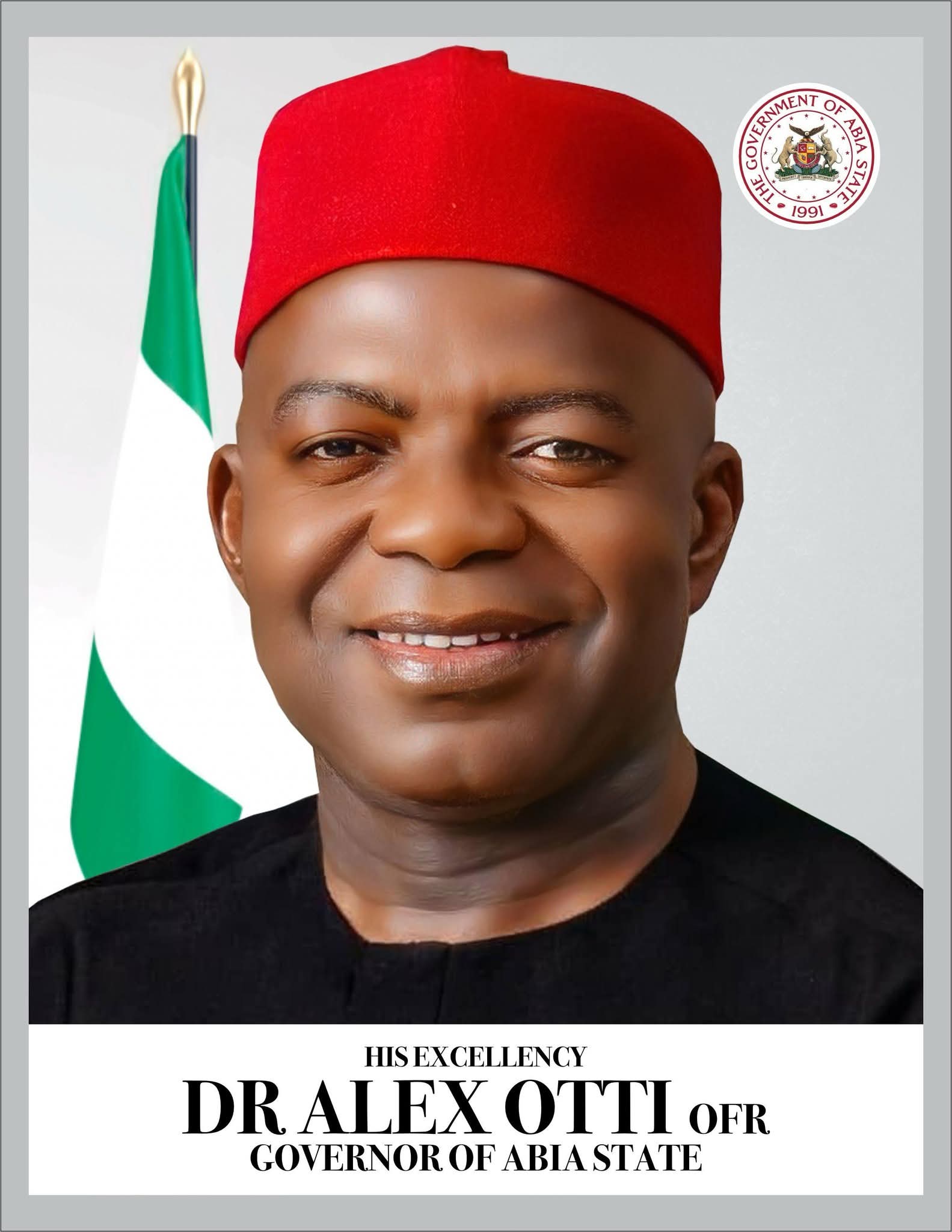

Abia’s Digital Bet Moves From Policy to Jobs as Otti Seeks Deeper UK Partnership
By Ogbonnaya Ikokwu
Abia State’s push to build a technology driven economy is entering a new phase, with Governor Alex Otti calling for stronger collaboration between government, development partners, businesses and civil society to turn digital infrastructure and skills into investment, jobs and solutions to everyday problems.
Otti made the call on Thursday at the opening of the State level Policy, Regulatory and Institutional Reforms Enabling Digital Transformation (SPRIRET) stakeholder engagement programme at the Michael Okpara Auditorium, Government House, Umuahia.
The governor said technology was no longer an optional addition to governance or business but a central driver of productivity and development, arguing that the immediate challenge was to create policies and institutions capable of allowing more people and businesses to benefit from digital transformation.
The position reflects a wider international development trend. The World Bank says a thriving digital economy can support job creation, innovation and sustainable development, while digital skills, startup ecosystems, modern institutions and enabling regulation are among the foundations required to achieve those gains.
The International Telecommunication Union has similarly identified gaps between digital skills supply and demand in Nigeria as an area requiring attention if emerging employment opportunities are to be captured.
Gov. Otti said his administration had placed technology at the centre of its development agenda since assuming office, including the creation of the Office of the Chief Information Officer and programmes designed to expand digital skills.
He said more than 2,200 young people had been trained through the TechRise programme, while initiatives including ThriveAbia, Abia Digi Upskill and Girls in ICT had widened access to digital skills.
Gov.Otti also highlighted the training of 500 civil servants under the State Level Inclusive Digital Transformation Programme supported by the United Kingdom’s Digital Access Programme.
The governor credited the British High Commission and its representatives, including British Deputy High Commissioner Jonny Baxter and former High Commissioner Richard Montgomery, with supporting Abia’s digital development.
The UK’s Digital Access Programme has been designed to expand affordable, safe and inclusive digital access and strengthen digital entrepreneurship and skills in partner countries, including Nigeria.
SPRIRET, funded by the UK Foreign, Commonwealth and Development Office and implemented by the Initiative for Digital Inclusion, is being rolled out in Abia, Edo, Ekiti, Enugu and Niger states. Its approach centres on policy, regulatory and institutional reforms intended to strengthen digital ecosystems and attract investment.
For Abia, Otti said the programme builds on policies already introduced by the state, including the Dig Once policy adopted in 2024 to guide the installation of underground broadband infrastructure and reduce unnecessary excavation and costs.
He also cited the state’s Startup Law, a N2 billion startup support fund, the Abia State Technological Skills Acquisition Centre and the N306 million Nkata technology enabling business grant. According to the governor, the grant had supported close to 100 businesses since its launch in May.
The administration’s stated ambition is to make Abia a regional ICT hub, but Otti said success should ultimately be judged by measurable economic outcomes: new investors, employment generated and the sector’s contribution to the state’s economy.
That emphasis mirrors how digital transformation is increasingly being approached elsewhere. From Kenya to Indonesia and Jamaica, World Bank examples show farmers, traders, educators and small businesses using digital platforms to reach markets, obtain information and create income opportunities.
Otti therefore challenged stakeholders to move beyond technology as an end in itself and develop practical solutions to security, unemployment, post harvest losses, urban property management and environmental degradation.
The central question confronting Abia, as the SPRIRET engagement begins, is consequently not whether technology matters, but whether policy, infrastructure, skills and investment can be connected strongly enough to convert technological possibility into broad based economic opportunity.
That will require sustained coordination among government, investors, technology entrepreneurs, communities and development partners, alongside transparent measurement of outcomes and continued attention to citizens and businesses that remain outside the digital economy.
#GovernorOttiIsBuildingTheNewAbia
#ToGodBeTheGlory
Ogbonnaya Ikokwu is a journalist and public affairs analyst writing from Umuahia.