
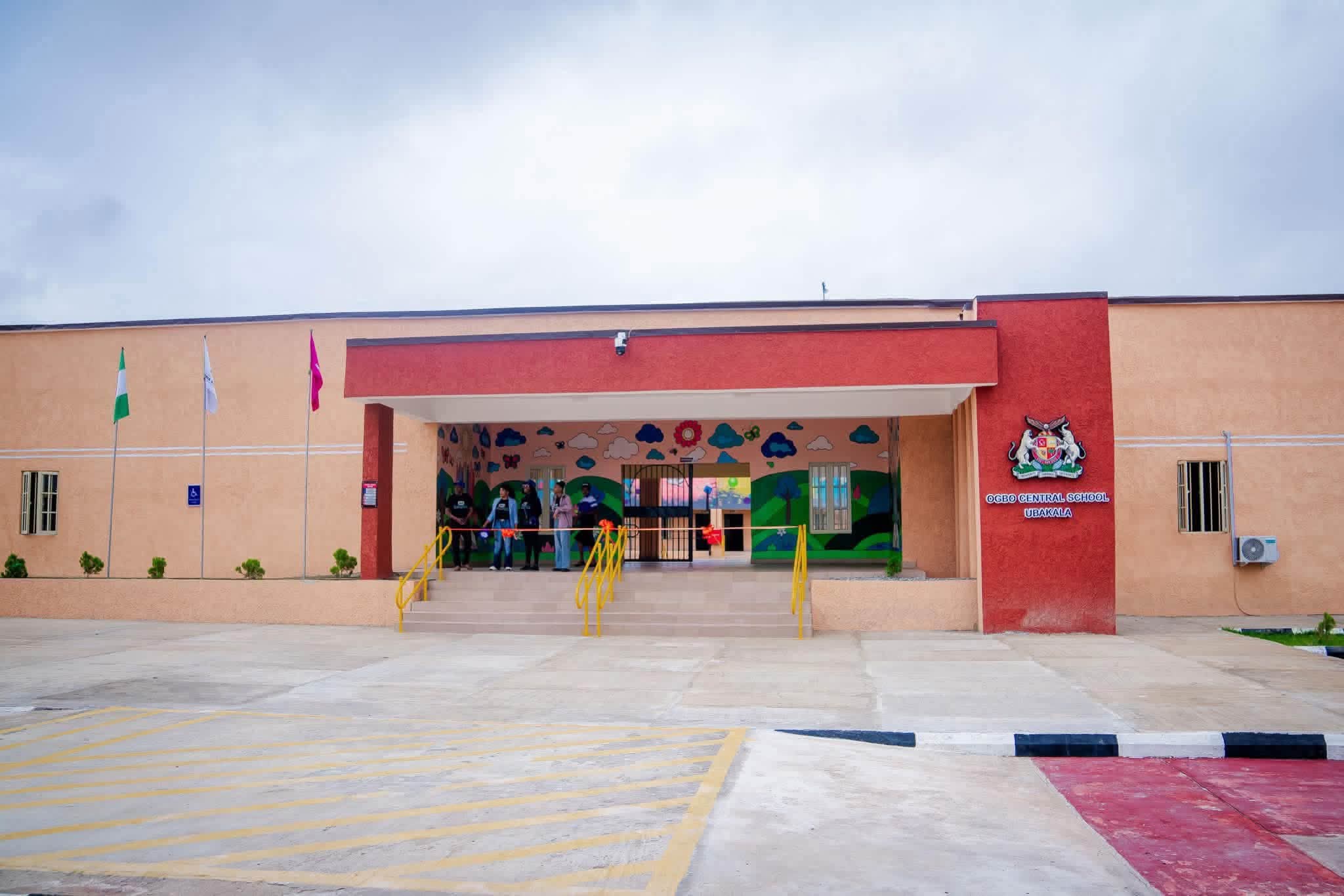

Abia SMART School: A Catalyst for the Future of Education in Nigeria
By Ogbonnaya Ikokwu
The quality of education a government provides for the next generation is a strong tool for measuring the impact many governments across the world have made on its citizens,
not merely by the number of highways and skylines they transform.
From Estonia’s globally acclaimed digital classrooms to Singapore’s technology driven schools, Finland’s learner centred education model and South Korea’s sustained investment in science, technology and innovation, the lesson has become unmistakable: nations that invest in human capital today are better positioned to compete in tomorrow’s knowledge economy.
It is inline with this global backdrop that the commissioning of the Ogbor Central Smart School in Ubakala, Umuahia South Local Government Area, has emerged as more than another public infrastructure project. Rather, it reflects a growing recognition within Nigeria that education, digital literacy and artificial intelligence are becoming central pillars of economic competitiveness and national development.
History was made on Tuesday, July 7, when the Minister of Education, Dr Maruf Tunji Alausa, formally commissioned the digitally enabled public school built by the Abia State Government under Governor Alex Otti.
Alausa had described the school
as a practical demonstration of visionary leadership and long term investment in human capital.
Standing before pupils, education stakeholders, traditional leaders and government officials, the Minister argued that societies achieve sustainable progress when investments extend beyond physical infrastructure to include the intellectual development of their people.
According to him, the future strength of any nation depends largely on how effectively it prepares young people for rapidly changing technological realities.
“The Governor’s education reforms are aimed at equipping every child in Abia State with the knowledge and skills required to compete successfully at the local, national and global levels,” Dr Alausa said.
He praised Governor Otti’s decision to embark on an ambitious programme of establishing multiple smart schools rather than isolated demonstration projects, saying such investments could expand educational opportunities across communities.
Referring to global trends in education, the Minister noted that access to digital learning tools and emerging technologies such as artificial intelligence is increasingly becoming an important component of modern education systems. He expressed optimism that exposing Abia pupils to these technologies from an early stage could strengthen their future competitiveness.
Around the world, education analysts have consistently linked digital learning with improved access to knowledge when supported by well trained teachers, reliable electricity, internet connectivity and strong curriculum implementation. International organisations including the United Nations Educational, Scientific and Cultural Organisation have also encouraged governments to integrate technology responsibly into classrooms while ensuring equity, teacher development and child protection remain central to educational reforms.
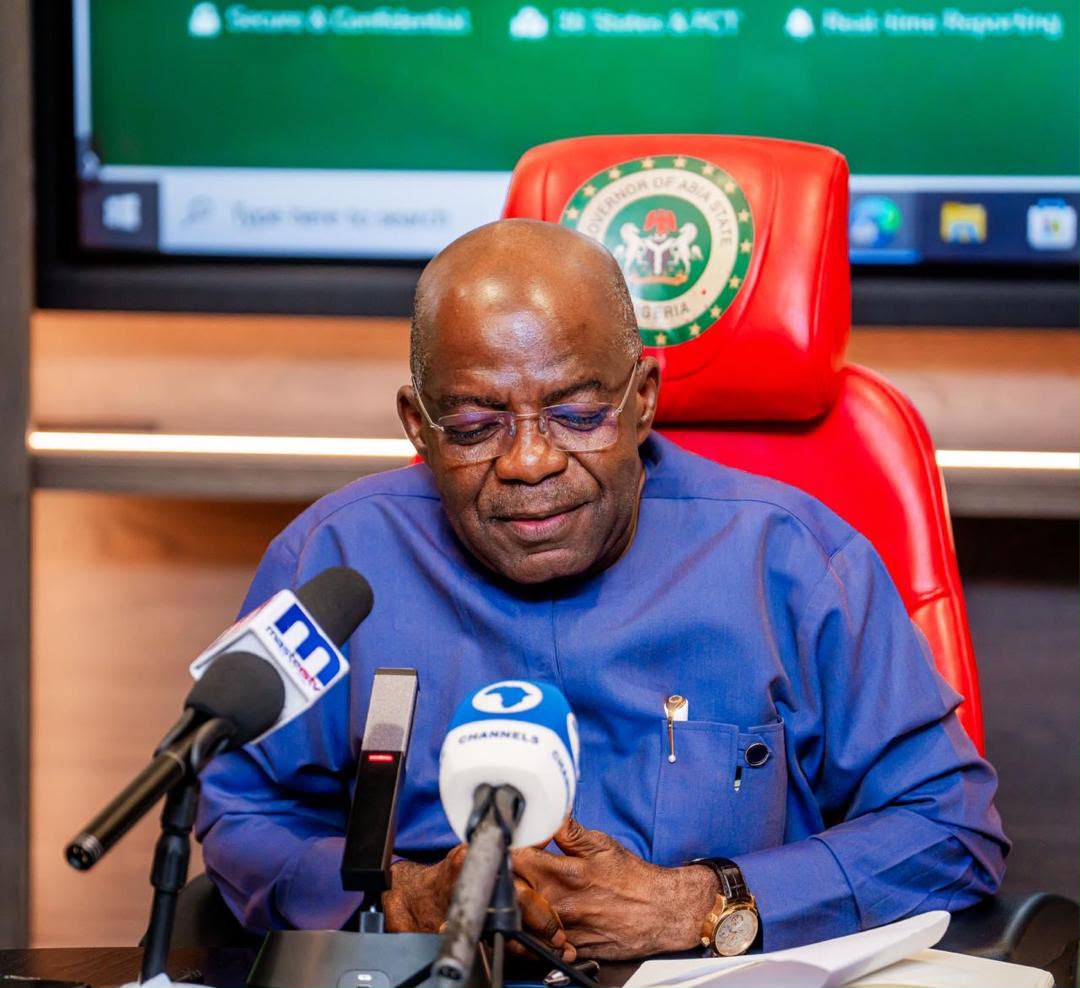
For Governor Alex Otti, the commissioning represented the beginning of what he described as a broader transformation of public education across the state.
Delivering an address titled “Tomorrow is the Reward,” the Governor announced that the Ubakala facility is the first of three smart schools scheduled for commissioning across Abia’s three senatorial districts in the month of July, with seventeen additional schools planned across the state’s local government areas.
According to him, each of the twenty schools is designed to accommodate about three hundred pupils in technology enabled classrooms equipped with interactive digital boards, while every learner will receive a tablet computer to support classroom activities.
He said the initiative marks Abia’s transition towards technology driven and participatory learning, moving beyond traditional methods of classroom instruction.
“Our focus has gone past the old mindset of going to school to pick a certificate and join the queue of job seekers thereafter,” Governor Otti said.
He explained that the long term objective is to nurture creative thinkers, innovators and future leaders capable of creating employment opportunities and driving economic growth rather than depending solely on existing jobs.
That vision mirrors policy discussions taking place across many countries as governments attempt to prepare young people for an economy increasingly shaped by automation, artificial intelligence, robotics and digital entrepreneurship.
Education economists have repeatedly argued that countries investing consistently in foundational learning, digital competence and critical thinking generally improve productivity, innovation and long term economic resilience.
The physical features of the Ubakala Smart School also illustrate an effort to redefine learning spaces within Nigeria’s public education system.
According to the Executive Chairman of the Abia State Universal Basic Education Board, Lady Lydia Onuoha, the facility contains thirteen digitally equipped classrooms, an Early Childhood Care Development Centre, a modern library, a thirty seat Information and Communication Technology centre, a sick bay and a dedicated girls’ room.
She described the initiative as a strategic investment intended to prepare Abia children for participation in the twenty first century global economy.
The Commissioner for Basic and Secondary Education, Elder Goodluck Ubochi, similarly characterised the project as evidence that education has become a central development priority for the present administration rather than merely another government programme.
For the community itself, the project carries significance beyond technology.
President General of the Ubakala Improvement Union, Elder Godwin Obioma Mbaonu, described the school as the beginning of a new chapter in basic education within the community, saying residents viewed it as a lasting legacy for future generations.
The Governor responded to additional community requests by directing the Commissioner for Works to introduce speed calming measures along the Ubakala road while also instructing the Commissioner for Environment to address erosion affecting the area.
Education development experts often observe that successful schools depend not only on classroom facilities but also on supporting infrastructure, safe transportation, environmental protection and active community ownership.
Governor Otti also declared that education in the smart schools would remain free and compulsory while warning against extortion of parents by teachers and vandalism of public school facilities.
Those commitments underscore another important lesson evident in successful education systems worldwide: technology alone cannot transform education without accountability, effective management, teacher professionalism and community participation.
Chief Executive Officer of Blue Giraffe Development Limited, Mrs Orieji Okwara Emele, whose organisation participated in delivering the project, described the school as an investment whose greatest returns would be measured not in bricks and concrete but in the opportunities created for children over many years.
Before arriving at the commissioning venue, the Minister inspected other strategic infrastructure including the Nnenna Otti Bus Terminal and ongoing Government House projects, reflecting the administration’s attempt to pursue physical development alongside investments in education.
As governments across Africa seek practical pathways towards economic diversification, the Ubakala Smart School offers an important case study in an emerging policy direction that places human capital at the centre of development planning.
Whether the initiative ultimately transforms educational outcomes will depend on consistent funding, teacher capacity building, curriculum quality, maintenance of digital infrastructure, reliable electricity, internet access and sustained political commitment beyond inauguration ceremonies.
In a century where knowledge is becoming the world’s most valuable resource, the most enduring monuments any government can build may no longer be highways or office complexes, but classrooms capable of preparing children for opportunities that extend far beyond the communities in which they were born.
This reality is increasingly difficult to dispute.
#GovernorOttiIsBuildingTheNewAbia
#ToGodBeTheGlory
Ogbonnaya Ikokwu is a journalist and public affairs analyst writing from Umuahia.