
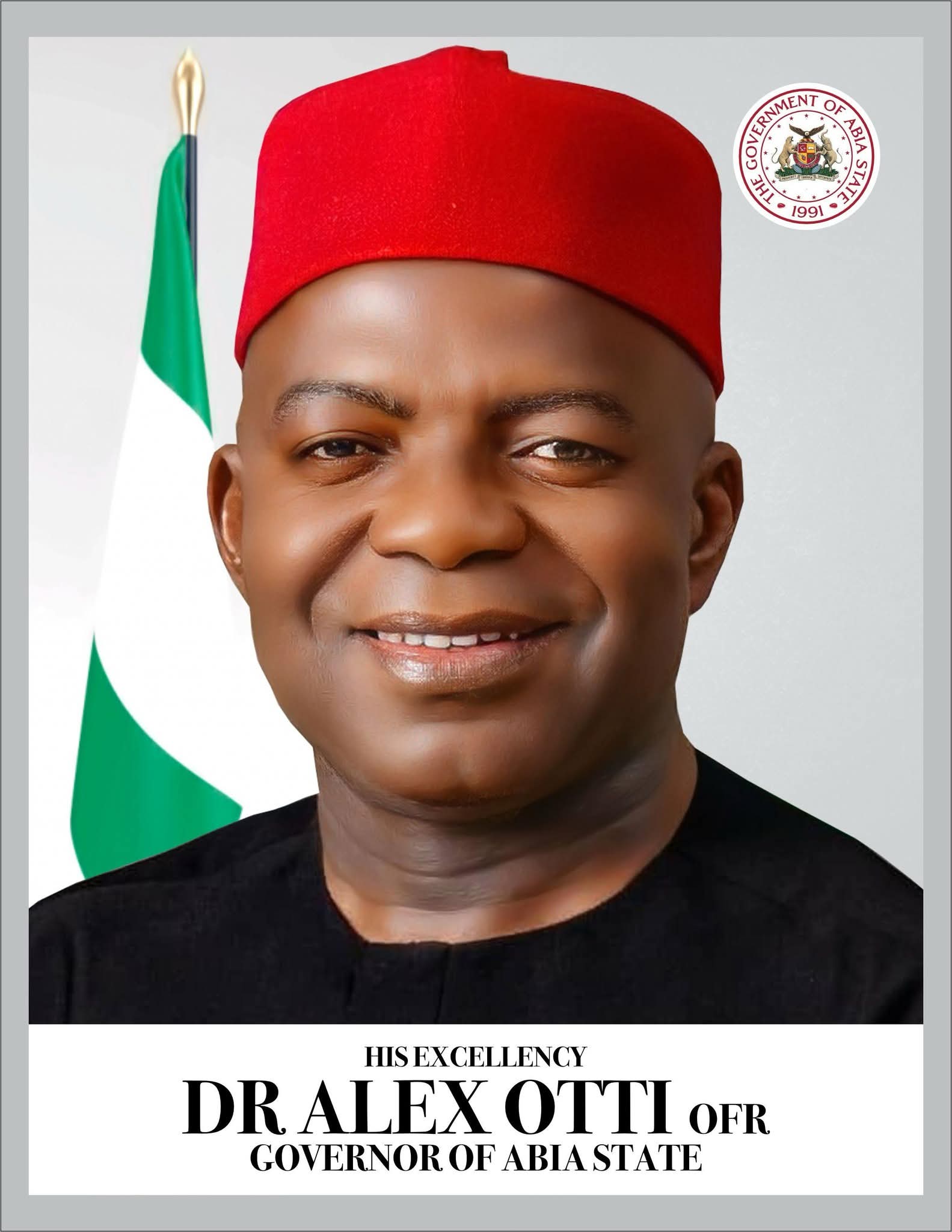

How Gov. Otti turned Abia’s Long gratuity wait into a moment of relief, laughter
By Ogbonnaya Ikokwu
For thousands of retired workers in Abia State, retirement has often been accompanied by an uncomfortable question: when will the gratuity earned after years of public service finally arrive?
That question is now confronting a different kind of answer under Governor Alex Otti, whose administration has commenced payment of outstanding gratuities to verified state and local government retirees while establishing a framework intended to prevent the backlog from becoming another permanent feature of public finance.
At the centre of the intervention is a liability put at ₦61.8 billion, accumulated between 2001 and 2025, according to the Abia Government’s review of records from the State Pensions Board and Local Government Pensions Board.
The validated figures show that ₦7.2 billion accrued between 2001 and 2010, ₦43.6 billion between 2011 and May 29, 2023, while a further ₦10.9 billion accrued from May 30, 2023 to the present.
The significance of the development is therefore larger than the payment of a single financial obligation. It represents an attempt by the Otti administration to convert a longstanding inherited liability into a structured public policy response.
Rather than treating the backlog as an unavoidable feature of government, the administration established a gratuity committee to validate the records, determine the actual liability and recommend a sustainable payment mechanism.
That process has now moved from paperwork to implementation, with the government confirming that some verified beneficiaries have already received their final gratuity payments.
For Governor Otti, the issue fits into a broader approach to workers’ welfare since his assumption of office in 2023. His administration pledged to institutionalize regular payment of salaries and pensions, with salary payments scheduled at the 28th of each month. The policy was presented as part of an effort to restore predictability to the relationship between government and its workforce.
The gratuity programme takes that philosophy beyond active employment.
A worker’s relationship with the government does not, in principle, end on the day of retirement. If salary represents payment for service rendered today, gratuity and pension represent obligations arising from service already rendered. When such obligations are delayed for years, the consequences are often felt not in government offices but in households.
Medical expenses, children’s education, family responsibilities and the ordinary costs of retirement do not wait for government arrears to be cleared.
This is why the decision to address the ₦61.8 billion liability carries significance beyond its monetary value.
The government has also sought to build continuity into the process. Gratuity payments from 2026 to 2031 are to be incorporated into the state’s Medium Term Expenditure Framework and annual budgets, providing a defined fiscal pathway for reducing the backlog.
The proposed technology driven system is another important element. Verified beneficiaries are expected to receive payments directly through a dedicated platform linked to the Treasury Single Account, while biometric validation is intended to strengthen identification, reduce duplication and ensure that public funds reach legitimate beneficiaries.
Such mechanisms reflect a broader international lesson in pension administration: historical liabilities are difficult to eliminate where governments lack reliable records, predictable funding arrangements and transparent payment systems.
Countries such as the United Kingdom and South Africa operate structured public sector retirement systems in which entitlement, verification and payment are governed by established institutional frameworks. Abia cannot simply reproduce those systems, but the underlying principles are relevant: accurate records, predictable financing, accountability and continuity across administrations.
That is perhaps the most consequential dimension of Otti’s intervention.
The immediate payment of gratuities can provide relief, but institutionalising the obligation could provide something even more valuable: confidence that future retirees will not have to depend on political promises before receiving benefits arising from their years of service.
The challenge remains substantial. A liability accumulated over more than two decades cannot realistically disappear within a single budget cycle. The government must therefore balance arrears settlement with salaries, pensions, infrastructure, healthcare, education and other competing demands on public resources.
That makes fiscal discipline essential.
It also makes transparency essential. As payments continue, retirees and the public will reasonably expect clear verification procedures, regular updates and evidence that the oldest obligations are receiving the promised priority.
For beneficiaries requiring clarification or assistance, the government has provided the Abia State Citizens Contact Centre on 0800 000 0232, available from 8am to 4pm on working days, while enquiries may also be sent to contactcenter@abiastate.gov.ng.
Ultimately, the story of the ₦61.8 billion gratuity liability is a story about how a government responds when it inherits a difficult problem.
Gov. Otti did not create a backlog that stretches from 2001 to 2025. But his administration has chosen to make its resolution a responsibility of the present.
And for the retired teacher, civil servant, local government worker or other public servant who has spent years waiting for the financial recognition attached to a lifetime of service, the most important measure of that decision will be simple: whether the promise becomes payment.
In that sense, Gov. Otti’s gratuity intervention is more than a fiscal exercise. It is an attempt to restore confidence between government and the people who spent their working lives serving it.
#GovernorOttiIsBuildingTheNewAbia
#ToGodBeTheGlory
Ogbonnaya Ikokwu is a journalist and public affairs analyst writing from Umuahia.