
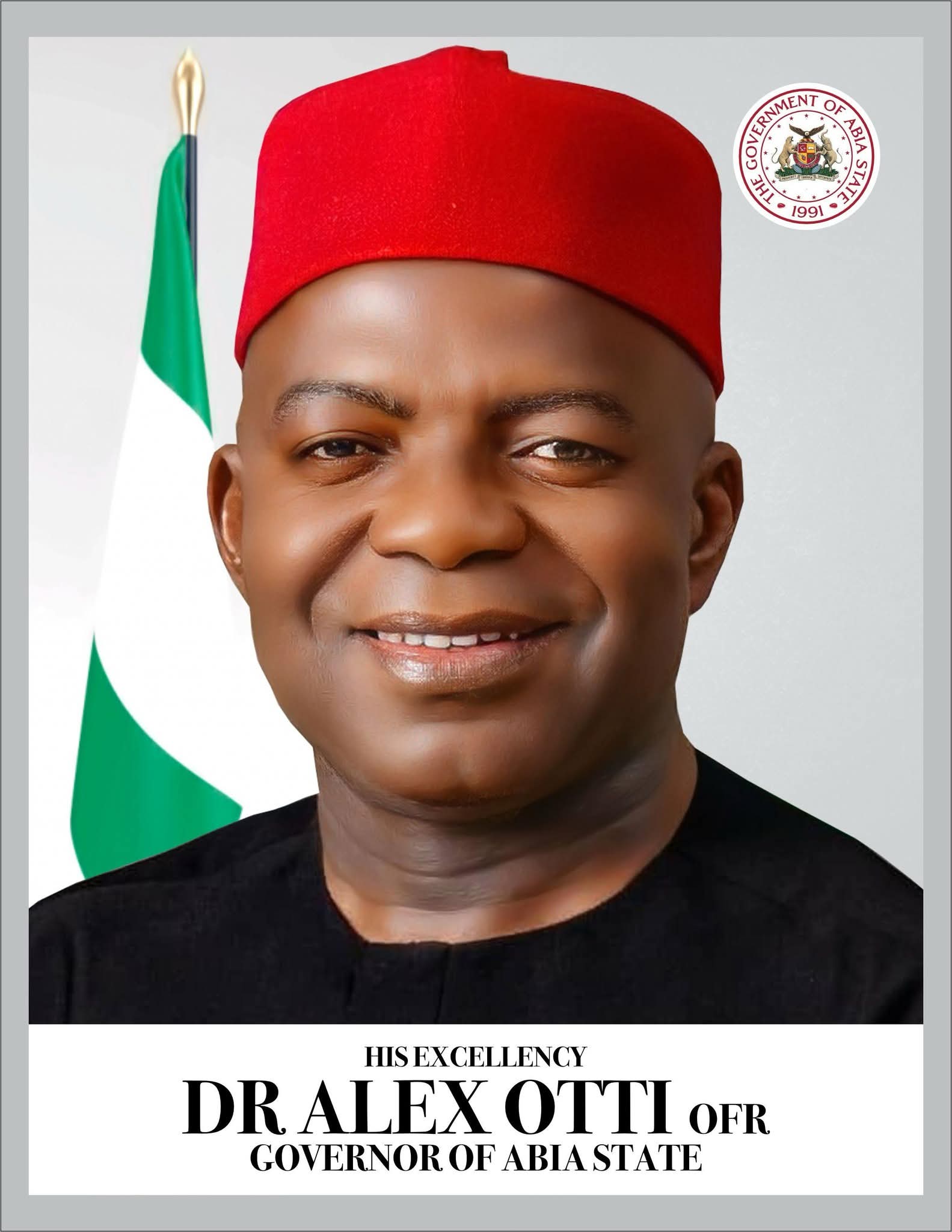

Invest Lagos 3.0: How Gov. Otti is positioning Abia for Africa’s next investment frontier
By Ogbonnaya Ikokwu
In the global competition for capital, talent and economic relevance, governments are increasingly judged not by promises but by their ability to create environments where investment can thrive and citizens can prosper.
Across Africa, countries and sub-national governments are racing to build the infrastructure, institutions and investor confidence required to attract the next wave of economic transformation. From Rwanda’s healthcare modernization drive and Morocco’s industrial expansion strategy to the United Arab Emirates’ investment-led development model, the lesson has become increasingly clear: sustainable growth follows deliberate planning, infrastructure investment and strategic partnerships.
It was against this backdrop that Governor Alex Otti of Abia State stepped onto the international stage at the Invest Lagos 3.0 Summit, where he presented what appears to be one of the most ambitious economic transformation agendas currently being pursued by any Nigerian state government.
Held in Lagos and hosted by the administration of Governor Babajide Sanwo-Olu in collaboration with the Commonwealth Enterprise and Investment Council, the summit attracted policymakers, global investors, development finance institutions, business executives and economic leaders from across the world.
The gathering, themed “Lagos: Business Gateway to Africa – Powering Africa’s Next Era of Trade, Talent and Global Economic Leadership,” provided participating states with an opportunity to market their investment opportunities before an international audience.
For Gov Otti, however, the occasion became more than an investment pitch. It was an opportunity to present Abia’s evolving economic narrative.
One of the centrepieces of Gov. Otti’s presentation is the proposed Abia Medical City project, an ambitious healthcare investment initiative designed to position the state as a regional healthcare hub.
Globally, healthcare has become one of the fastest-growing sectors attracting investment. Countries such as India, Thailand, Turkey and Singapore have transformed healthcare into major economic assets, attracting foreign patients while creating thousands of high-value jobs.
Nigeria, by contrast, continues to lose substantial resources annually through medical tourism as citizens seek treatment abroad.
Gov. Otti told investors that his administration intends to change that narrative.
According to him, Abia has already acquired approximately 200 hectares of land and completed critical access infrastructure for the proposed Medical City project, which is projected to require about $1.3 billion in investment.
The broader objective is not merely healthcare delivery but economic value creation.
If successful, the project could position Abia to capture a portion of the billions of dollars spent yearly by Nigerians seeking medical services outside the country, while simultaneously attracting patients from neighbouring African countries.
The governor’s pitch was backed by what he described as significant investments already made in healthcare.
Over the last three years, healthcare has consistently received about 15 percent of Abia’s annual budget allocation, second only to education.
The administration reports that 277 Primary Healthcare Centres have undergone refurbishment, while more than 135 have already been fully functionalized. About 800 healthcare professionals have also been recruited, with some reportedly relocating from outside the state to join the health sector workforce.
In addition, major general hospitals are undergoing reconstruction, while tertiary healthcare institutions are receiving renewed attention.
For development economists, such investments are often considered foundational requirements before larger healthcare ecosystems can emerge.
Beyond healthcare, Gov. Otti’s presentation highlighted another pillar of his administration’s economic strategy—the Abia Industrial and Innovation Park (AIIP) located in Owaza, Ukwa West axis of the state.
Around the world, industrial parks have become catalysts for economic growth.
China’s Shenzhen Industrial Zone transformed a fishing settlement into a global manufacturing powerhouse. Ethiopia’s industrial parks have attracted significant foreign direct investment. Similar models have generated employment and industrial growth in countries ranging from Vietnam to Morocco.
The Abia Industrial and Innovation Park seeks to replicate aspects of these successful models by leveraging the state’s oil and gas assets while creating a platform for manufacturing, innovation and export-oriented industries.
The governor’s indication that further engagement would be pursued with Afreximbank reflects an understanding that industrial infrastructure requires long-term financing partnerships and institutional support.
Perhaps the strongest argument advanced by Gov. Otti during the summit centred on electricity.
Across developing economies, reliable power remains one of the most important determinants of industrial competitiveness.
Manufacturers routinely identify energy costs as one of their highest operational expenses.
In Abia’s case, the governor pointed to the near 24-hour electricity supply now available within the Aba ring-fenced area, a development widely regarded as one of the most significant economic interventions in the state’s recent history.
The operationalization of the Geometric Power project after years of delays has altered the energy landscape of Aba and surrounding communities.
Gov. Otti disclosed that discussions are already underway to extend similar benefits to Umuahia and other parts of the state through collaboration with the Enugu Electricity Distribution Company and the newly established Abia State Electricity Regulatory Agency.
The long-term vision, according to the governor, is for Abia to attain energy sufficiency capable of supporting industrial expansion.
His revelation that a steel manufacturing investor is considering relocating operations to Abia specifically because of power availability underscores a reality often overlooked in development debates: investors follow infrastructure.
No investment destination can thrive without transportation networks.
The administration reports that 414 roads spanning approximately 864 kilometres have been constructed, reconstructed or rehabilitated, while work continues on dozens of additional road projects.
Equally significant are efforts to modernize major commercial centres.
The reconstruction of Ekeoha Market and the comprehensive upgrading of Ariaria International Market reflect attempts to reposition traditional trading centres for modern commerce.
Ariaria, often described as one of West Africa’s largest indigenous manufacturing and commercial hubs, remains central to Abia’s economic identity.
Improved infrastructure within such markets has the potential to enhance productivity, increase trade efficiency and attract greater private-sector participation.
Another notable feature of Abia’s emerging development model is its investment in electric transportation.
The deployment of electric buses places the state among the early adopters of clean mobility initiatives within Nigeria’s sub-national landscape.
With additional buses expected from China and a target of 100 electric buses, Abia appears to be aligning with a broader global shift toward sustainable transportation.
Cities from London and Shenzhen to Kigali and Nairobi have increasingly embraced electric mobility as part of climate and urban development strategies.
While still in its early stages, Abia’s experiment signals an effort to align local development planning with global environmental trends.
Investment announcements cited during the summit suggest that confidence in the state’s economy may be growing.
Agriculture alone has reportedly attracted commitments exceeding $320 million, including substantial investments in oil palm cultivation and processing.
Additional industrial investments are emerging in manufacturing, while the revival and repositioning of previously dormant industrial assets have created new opportunities for private-sector participation.
The state’s airport project, ongoing feasibility studies for a proposed seaport, and efforts to expand logistics infrastructure indicate a broader strategy aimed at integrating Abia more effectively into national and regional trade networks.
For many observers, what distinguished Gov. Otti’s presentation was not merely the scale of the projects outlined but the attempt to present them as components of an integrated economic strategy.
Healthcare, power, transportation, industry, agriculture and logistics were presented not as isolated projects but as interconnected elements of a development architecture designed to attract investment and generate long-term growth.
Whether all the ambitions outlined will ultimately achieve their intended outcomes remains a question history alone can answer.
However, at a time when many sub-national governments struggle to articulate coherent economic visions, Abia’s investment narrative is increasingly drawing attention beyond the state’s borders.
At Invest Lagos 3.0, Gov. Alex Otti’s message to global investors was straightforward: Abia is no longer merely seeking development; it is positioning itself to compete for it.
And in an increasingly competitive world economy, that may be one of the most consequential shifts taking place in Nigeria’s South-East.