

When Stories Become Strategy: How Gov. Otti’s Creative Economy Vision Could Place Abia on Africa’s Entertainment Map
By Ogbonnaya Ikokwu
Across the world, governments are increasingly turning to the creative economy not merely as a cultural asset but as a strategic driver of economic growth, job creation, tourism and global influence.
From the Hollywood in the United States to Bollywood in India, from South Korea’s globally celebrated entertainment industry to the flourishing film sectors of South Africa and Rwanda, investments in storytelling, film production, music and cultural exports have become powerful instruments of development.
It is against this backdrop that Governor Alex Otti’s latest engagement with Nollywood practitioners offers a glimpse into a broader vision that seeks to position Abia among emerging creative economy destinations on the African continent.
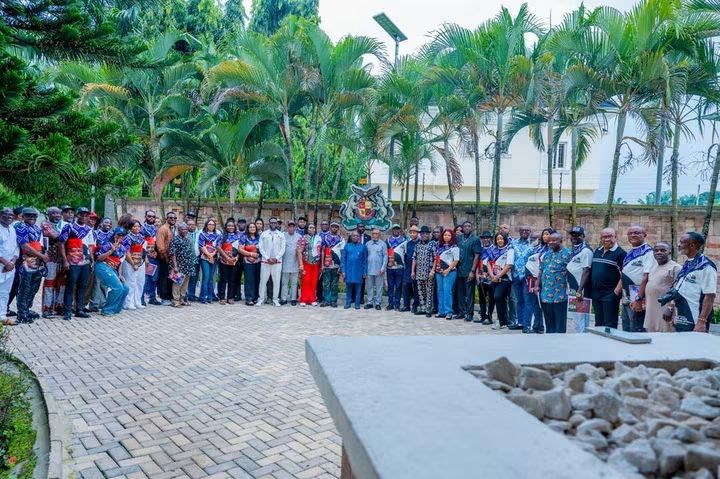
Speaking during a meeting with a delegation of Nollywood practitioners led by film producer Francis Ifeakandu, Gov. Otti reaffirmed his administration’s commitment to creating the conditions necessary for the growth of the entertainment and creative industry in Abia State.
The delegation is currently working on “The Chronicles of Enyimba City”, a large scale film project designed to showcase the history, culture, tourism assets and developmental evolution of Abia, with particular focus on Aba, popularly known as the Enyimba City.
For many observers, the significance of the meeting extended beyond a routine courtesy visit. It reflected a growing recognition that the creative industry has become one of the world’s fastest expanding economic sectors.
According to the United Nations Educational, Scientific and Cultural Organisation (UNESCO), cultural and creative industries contribute significantly to global economic output and provide millions of jobs worldwide, particularly for young people. Nations that have strategically invested in film, music, fashion and cultural tourism have increasingly reaped substantial economic and social benefits.
Gov. Otti noted that while government may not directly finance private film ventures, it remains committed to providing an enabling environment that allows creative enterprises to flourish.
“I am always careful about the promises I make. I assured you of support, and that support remains available.
“Government will continue to provide an enabling environment and work with stakeholders to ensure that initiatives capable of promoting Abia and creating opportunities for our people succeed,” the governor said.
His remarks resonate with a model increasingly adopted in many successful creative economies where governments focus on infrastructure, policy support, investment promotion and ecosystem development rather than direct ownership of creative projects.
In South Korea, government backed investments in infrastructure, training and international promotion helped transform the country’s cultural exports into a global phenomenon. The result has been the worldwide influence of Korean films, television productions and music, generating billions of dollars annually while strengthening the nation’s international profile.
Similarly, in parts of Africa, governments are increasingly recognising the economic potential of film production. Rwanda has invested in creative industry development and film festivals as part of its tourism and investment strategy, while South Africa continues to attract international productions through supportive policies and modern production facilities.
For Abia, the vision being articulated by Gov. Otti appears centred on creating a comparable enabling environment that can attract investors, creative professionals and production companies.
One of the most notable revelations during the meeting was the Governor’s disclosure that his administration is actively pursuing plans to establish an Entertainment City in Aba.
According to him, preliminary processes, including land acquisition and compensation arrangements, have commenced as government works towards bringing the project to fruition.
If realised, the proposed Entertainment City could represent one of the most ambitious creative infrastructure projects in the South East, potentially providing facilities capable of supporting film production, talent development, cultural exhibitions, tourism activities and related business investments.
The initiative aligns with a broader economic philosophy that views creativity as a viable contributor to wealth creation and employment generation.
Gov. Otti’s personal connection to the industry added another dimension to the conversation. Recalling his experience as a movie producer during the 1990s, he said he understood both the opportunities and challenges faced by practitioners within Nollywood.
Industry stakeholders have long argued that beyond talent, the growth of film production depends heavily on infrastructure, logistics, security, transportation networks and supportive public policies. These are areas where state governments can play a catalytic role.
For members of the visiting delegation, the meeting also provided an opportunity to showcase the scale and ambition of The Chronicles of Enyimba City project.
Producer Francis Ifeakandu informed the governor that auditions had been conducted across all seventeen local government areas of Abia State, while additional exercises were extended to neighbouring states and major cities.
According to him, the production features more than 2,000 cast members and has been structured into six seasons comprising five episodes each. The project is expected to explore various dimensions of Abia’s historical journey, cultural identity, tourism potential and contemporary development.
He described the production as an opportunity to tell Abia’s story from the perspective of its people while projecting the state to wider audiences.
The producer also commended the infrastructural developments witnessed across parts of the state, noting that several members of the Nollywood team who had not visited Abia in recent years expressed surprise at the changes they observed during their tour.
Beyond entertainment, experts increasingly view such productions as vehicles for destination branding. Successful films have often stimulated tourism, encouraged investment and enhanced public awareness of locations featured on screen.
In countries such as New Zealand, film productions have contributed significantly to tourism growth by introducing global audiences to destinations they may never have previously considered visiting. Similar outcomes have been recorded in several regions where film and tourism policies work in tandem.
For Abia, proponents believe that authentic storytelling rooted in local history, culture and innovation could help strengthen the state’s visibility beyond Nigeria’s borders.
As governments across the world continue to compete for investments, talent and tourist attention, culture and creativity are emerging as increasingly important assets.
Governor Otti’s engagement with Nollywood practitioners and the proposed Entertainment City project suggest that Abia intends to participate in that global conversation.
Whether through film production, cultural promotion, tourism development or creative entrepreneurship, the message emerging from the Government House Umuahia is that storytelling is no longer viewed solely as entertainment. It is increasingly being recognised as an economic tool, a cultural bridge and a platform through which Abia can project its identity to the world.
As cameras prepare to roll on The Chronicles of Enyimba City and plans for creative infrastructure continue to advance, attention will increasingly focus on how effectively vision can be translated into sustainable opportunities for young people, creative professionals and investors.
For a state seeking to expand its economic frontiers, the creative industry may well become one of the next defining chapters in Abia’s development story.
#GovernorOttiIsBuildingTheNewAbia
#ToGodBeTheGlory
Ogbonnaya Ikokwu is a journalist and public affairs analyst writing from Umuahia.