
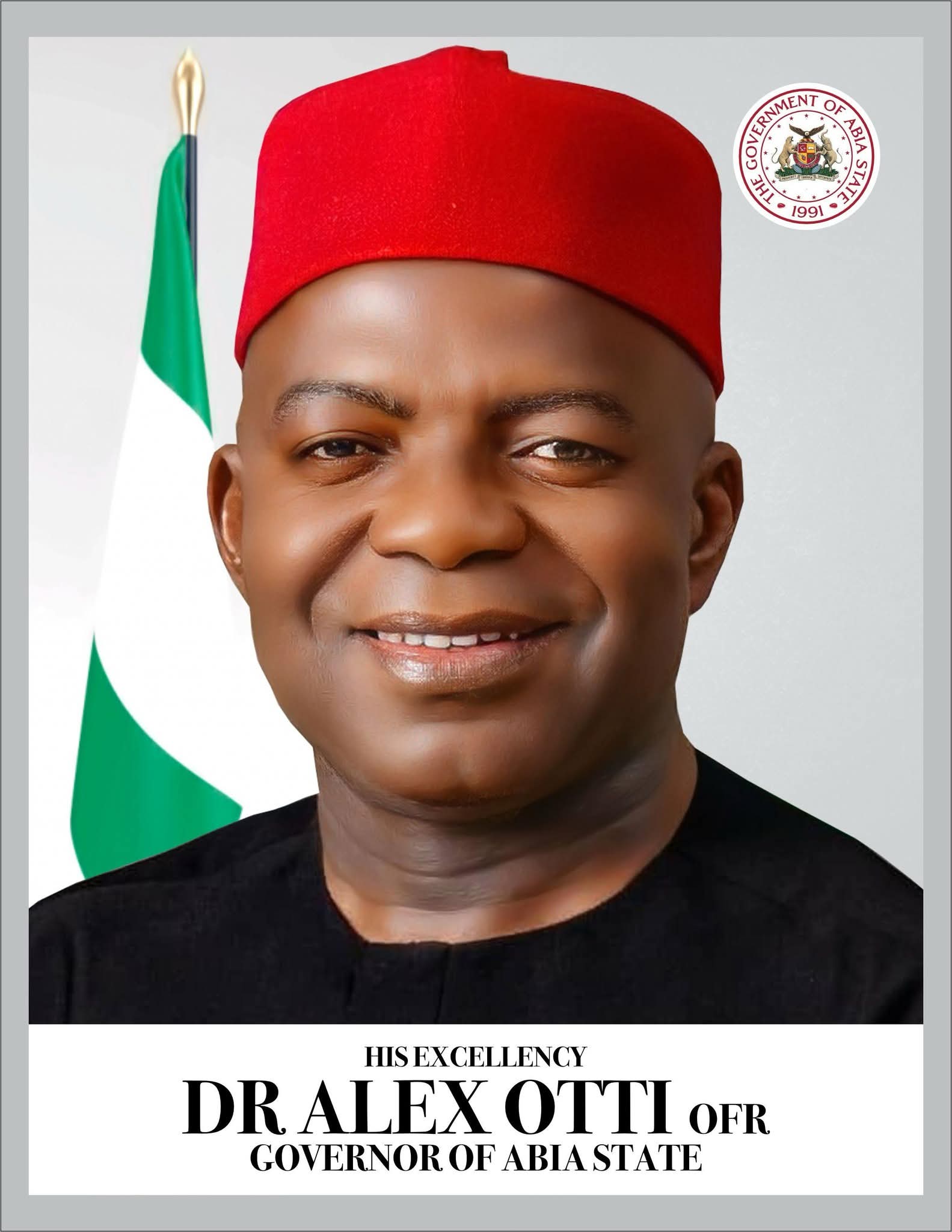

New Abia: Celebrating Three Years of Impactful Leadership Under Gov. Otti
By Ogbonnaya Ikokwu
In many developing societies, roads are more than strips of tar. They are symbols of power, proof of governance, and often the first visible measure by which citizens judge leadership. From the sprawling highways of Kigali in Rwanda to the urban renewal corridors of Lagos in Nigeria, governments intentional about good governance frequently begin with concrete, drainage channels, streetlights, and transport systems that reconnect neglected communities to economic life.
Three years into the administration of Governor Alex Otti, the same philosophy appears to be unfolding in Abia State, where infrastructure has become both policy instrument and political language.
At the Michael Okpara Auditorium in Umuahia during his monthly media interaction titled “Governor Alex Otti Speaks to Abians,” the governor presented a portrait of a state attempting to redefine itself after years of public frustration over failing infrastructure, mounting debt, and institutional decay.
Yet beyond the statistics announced at the event lies a larger story: whether governance in one of Nigeria’s historically challenged states can move from promises to measurable transformation.
For decades, Abia’s public image was shaped less by its entrepreneurial reputation and more by collapsing roads, salary disputes, abandoned projects, and deteriorating public institutions. Commercial centres such as Aba, once regarded as industrial nerve points in southern Nigeria, suffered from years of neglect that weakened investor confidence and slowed economic activity.
Today, the Otti administration argues that reversing that narrative requires visible, measurable intervention.
According to the governor, 414 roads stretching approximately 864.12 kilometres have either been completed or substantially delivered within three years. Another 82 roads covering about 212 kilometres remain under construction across different parts of the state.
Unlike previous eras where roads were often commissioned without supporting infrastructure, the administration insists that drainage systems and street lighting now accompany road construction.
“In the last three years, we have constructed 414 roads with street lights and drainage systems,” Otti said during the interaction.
Observers note that the emphasis on integrated infrastructure reflects a broader trend seen in urban renewal programmes across emerging economies. In cities such as Kigali and Addis Ababa, road projects increasingly incorporate lighting, drainage, pedestrian considerations, and environmental planning rather than serving merely as transportation corridors.
Urban development analysts often argue that infrastructure succeeds not when it is merely built, but when it improves mobility, security, sanitation, and economic productivity simultaneously. That appears to be the template the Abia government hopes to emulate.
In Umuahia and Aba, street lighting has become one of the administration’s most publicly visible interventions. Traders and transport operators in some rehabilitated corridors now speak of increased night time movement and improved commercial activity after dark. For many residents, the symbolism of functioning public lighting carries emotional significance in a state long accustomed to darkness after sunset.
But infrastructure alone rarely sustains political credibility in an economy struggling with inflation, unemployment, and declining purchasing power. Fiscal management often determines whether physical development can survive beyond media announcements. This is where the administration’s debt reduction policy has attracted attention.
The governor disclosed that Abia’s debt burden, estimated at about ₦191 billion in 2023, had fallen to below ₦50 billion by the end of 2025. If independently validated in full, such a reduction would represent one of the sharpest debt contractions recorded by a Nigerian sub national government within a short political cycle.
International development institutions have repeatedly warned that rising debt exposure among sub national governments in Africa threatens sustainable development. Several states across Nigeria continue to struggle under debt servicing obligations that consume large portions of internally generated revenue.
For policy observers, therefore, Abia’s debt claims are significant not merely as political messaging, but as indicators of whether disciplined fiscal governance can coexist with aggressive infrastructure spending.
The administration also referenced improved transparency rankings by civic technology organisation BudgIT, which reportedly moved the state from 17th position in 2023 to fourth in 2025 in aspects of governance assessment.
Around the world, transparency indices increasingly shape investment perceptions. From Singapore to Botswana, governments that institutionalise financial openness often gain stronger investor confidence and public trust.
Still, transparency remains difficult to measure solely through rankings. Civil society groups frequently argue that citizens ultimately judge accountability through lived realities: salaries paid on time, accessible healthcare, safer roads, reduced corruption, and functioning public services.
Perhaps recognising this, the Otti administration has attempted to place equal emphasis on social infrastructure.
In healthcare, the government announced the recruitment of 821 health professionals, with 771 already deployed. More than 93,000 residents have reportedly enrolled in the state health insurance scheme, while 277 primary healthcare centres have undergone retrofitting.
In many African societies, healthcare reform carries political sensitivity because public hospitals often mirror the condition of the wider state. Broken clinics, shortages of personnel, and inaccessible treatment facilities frequently reinforce citizen distrust in government.
Countries such as Rwanda and Ghana have demonstrated how investment in community based healthcare systems can significantly improve public confidence and health outcomes. Abia’s reforms appear designed within that broader philosophy of decentralised healthcare accessibility.
Education has also become central to the administration’s messaging. The planned commissioning of smart schools in Ubakala and Umuomaiukwu reflects growing attempts across developing economies to integrate digital learning into public education systems. Governments in Kenya and India have similarly expanded technology enabled classrooms as part of efforts to prepare students for increasingly digital economies.
Yet educational transformation often depends less on buildings than on teacher quality, curriculum relevance, and sustained funding. Recognising this, the governor highlighted ongoing teacher recruitment and upgrades across tertiary institutions including Abia State University, Abia State College of Education Technical Arochukwu, and Ogbonnaya Onu Polytechnic Aba.
Meanwhile, the administration’s investment in electric buses introduces another layer to Abia’s evolving development narrative.
Across Europe and parts of Asia, electric mobility is increasingly tied to climate conscious urban planning. While Nigeria’s public transport infrastructure still relies overwhelmingly on fossil fuel powered vehicles, several states are beginning to experiment with cleaner transportation systems.
The installation of charging stations in Umuahia and Aba suggests an attempt to align Abia with emerging global transportation trends, even as many Nigerian states continue struggling with basic transit coordination.
Land reforms may prove less publicly dramatic than roads and buses, but they are potentially more consequential economically.
The governor said 4,707 Certificates of Occupancy, have been signed exceeding the combined total issued between 1999 and 2023. It also announced the digitisation of four million land documents and completion of a new master plan in partnership with UN Habitat.
Land administration reform is often central to economic modernisation. In countries such as Rwanda and United Arab Emirates, digitised land systems have reduced disputes, improved investment confidence, and accelerated urban planning efficiency.
For Abia, where land disputes and bureaucratic bottlenecks have historically slowed property transactions and development, the reforms could have long term implications if sustained transparently after the tenure of Governor Otti.
Still, governance is rarely judged solely by numbers. Beyond kilometres of roads and fiscal ratios lies a deeper emotional question confronting many Nigerian states: can citizens genuinely regain confidence in public institutions after years of disappointment?
This may explain why Otti repeatedly returned to the phrase “restoring dignity” during his remarks.
“The most important part of this administration is the impact it has made in human capital development, infrastructure renewal, fiscal responsibility, social justice, all wrapped up in restoring the dignity of our people,” the governor declared.
In political communication, dignity is a carefully chosen word. It speaks not only to economics, but to psychology. It suggests a government attempting to convince citizens that they deserve functioning roads, responsive hospitals, cleaner environments, and institutions that work.
Whether history ultimately validates these claims will depend on sustainability beyond ceremonial commissions and anniversary celebrations. Across Africa, many administrations have launched ambitious reform programmes only to see progress reversed by weak institutions, political transitions, or inconsistent implementation.
For now, however, Abia stands at a moment of visible transition. Roads are appearing where potholes once dominated. Public lighting is returning to neighbourhoods previously swallowed by darkness. Hospitals are being renovated. Schools are being modernised. Debt figures are shrinking on paper. Electric buses are entering streets where transport systems once symbolised urban disorder.
To supporters, these are signs of rebirth. To sceptics, they remain promises requiring long term proof.
But in the streets of Umuahia and Aba, where citizens daily encounter the physical evidence of governance, the debate is no longer whether change is visible. It is whether the momentum after the exit of Governor Alex Otti in 2031can endure long enough to permanently alter the trajectory of a state long burdened by unrealised potential and of course after the expiration of the eight years tenure of the governor, Otti will hand over to a capable successor.
#GovernorOttiIsBuildingTheNewAbia
#ToGodBeTheGlory
Ogbonnaya Ikokwu is a journalist and public affairs analyst writing from Umuahia.