

Otti’s Heritage Economy Vision Finds Powerful Ally in Oluremi Tinubu’s ₦2 Billion Akwete Intervention
By Ogbonnaya Ikokwu
The story of nations that have successfully transformed indigenous crafts into engines of economic prosperity rarely begins inside factories. It often starts in villages where generations have quietly preserved traditions that the modern world later rediscovers as priceless cultural assets.
Japan elevated the kimono from ceremonial attire into a global luxury brand. India’s Banarasi silk and Kanchipuram fabrics became international symbols of craftsmanship.
Ghana’s Kente cloth evolved from royal regalia into a globally recognised African identity. South Africa transformed its indigenous beadwork into an export industry, while Indonesia secured UNESCO recognition for Batik, opening new frontiers for tourism, fashion and creative enterprise.
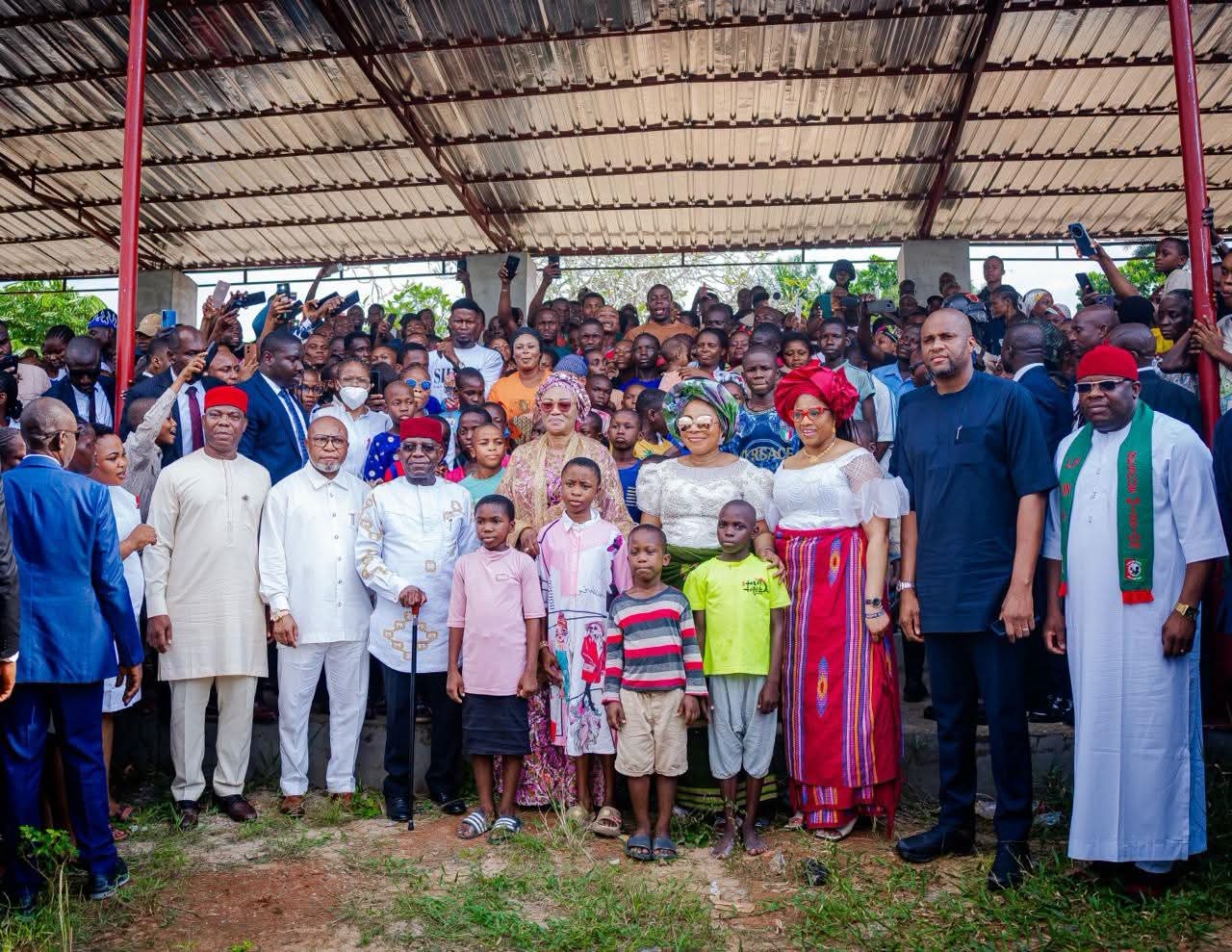
Against this global backdrop, the Tuesday’s July 21, 2026 visit of Nigeria’s First Lady, Senator Oluremi Tinubu, to the historic Akwete weaving community in Abia State may ultimately be remembered not merely as a ceremonial outing but as a defining moment in Nigeria’s renewed conversation about culture as economic infrastructure.
For centuries, the women of Akwete in Ukwa East Local Government Area have woven one of Africa’s oldest surviving indigenous textiles. Distinguished by intricate geometric patterns painstakingly produced on vertical looms using cotton, raffia and silk, Akwete fabric has endured colonialism, industrialisation and changing fashion trends.
Yet despite its remarkable history and craftsmanship, the industry has remained largely undercapitalised, with many master weavers producing internationally admired textiles under conditions that scarcely reflect their artistic value. The paradox has long raised a difficult question: how could a fabric admired across continents remain disconnected from the commercial success enjoyed by similar indigenous textiles elsewhere?
That question appeared to shape the significance of Senator Tinubu’s visit. After touring the Akwete Weaving Cooperative Society, interacting directly with women artisans and observing the weaving process, the First Lady announced a ₦2 billion intervention aimed at supporting the establishment of a modern production and empowerment hub for the renowned textile industry. The intervention, according to her, was inspired by a documentary she watched on the Nigerian Television Authority, which introduced her to the centuries old weaving tradition and motivated her determination to visit the community personally.
Her message extended beyond financial support. She challenged Nigerians, particularly people of Igbo extraction, to embrace Akwete fabric as a national cultural brand deserving wider patronage.
Describing the textile as a priceless heritage handed down across generations, she urged communities to modernise production without sacrificing authenticity, insisting that indigenous culture remains a nation’s enduring identity. She disclosed that if President Bola Ahmed Tinubu secures another term in office, she intends to wear an Akwete buba and wrapper, a symbolic commitment designed to project the fabric onto the national stage.
Her remarks resonated with a growing international movement that increasingly views traditional craftsmanship not as relics of the past but as strategic assets within the global creative economy.
Across Europe, Asia and parts of Latin America, governments now invest heavily in preserving indigenous textiles because cultural industries generate employment, tourism revenue, export earnings and international branding opportunities.
Fashion houses regularly collaborate with traditional artisans, creating premium markets for fabrics that once survived only through local patronage. Development economists increasingly argue that cultural industries represent one of the most sustainable pathways for inclusive economic growth because they combine entrepreneurship, heritage preservation and women’s economic participation.
Governor Alex Otti located the First Lady’s intervention within that broader economic framework. Thanking her for what he described as a timely and strategic visit, he recalled that his administration began deliberate engagement with the Akwete industry shortly after assuming office in 2023.
According to the governor, unlocking the industry’s potential required dismantling long standing barriers while embracing innovation capable of transforming traditional weaving into a globally competitive enterprise. He pledged the state’s readiness to partner with the First Lady in establishing a modern production hub that could reposition Akwete as a major contributor to Nigeria’s creative economy.
The governor also used the occasion to commend President Bola Ahmed Tinubu for policy decisions including fuel subsidy removal and foreign exchange reforms, arguing that such measures expanded fiscal space available to federal, state and local governments for developmental investments.
His remarks illustrated the intersection between national economic reforms and local industrial revival, suggesting that cultural industries could become important beneficiaries of broader structural changes if supported by deliberate public investment.
For the women whose fingers preserve centuries of inherited knowledge, however, the significance of the day extended beyond economics.
It represented national recognition. Wife of the Governor, Mrs Priscilla Otti, described the visit as historic, noting that it marked the first time a Nigerian First Lady had personally visited Akwete to identify with its women weavers.
She traced the industry’s historical evolution to the legendary nineteenth century weaver Daada Nwankata, whose innovations elevated Akwete weaving into one of the most distinguished textile traditions within the Igbo nation. She praised Senator Tinubu’s Renewed Hope Initiative for consistently translating social investment into practical empowerment for women, small businesses and vulnerable communities.
The event equally reflected an uncommon political convergence. Distinguished personalities across party lines, including Senator Enyinnaya Abaribe, Hon Chris Nkwonta, former Minister Dr Sampson Ogah and several state officials, joined traditional rulers, community leaders and cultural stakeholders in celebrating the intervention. During the ceremony, Senator Tinubu was conferred with the traditional title “Ugo Nwanyi of Abia”, translated as “The Pride of Womanhood”, in recognition of her support for women, cultural preservation and community development.
Beyond the speeches and ceremonies lies a larger challenge. Financial commitments alone rarely transform traditional industries. Countries that successfully elevated indigenous crafts combined investment with research, branding, intellectual property protection, tourism development, export promotion, digital marketing, vocational training and partnerships with global fashion markets. If the proposed production hub integrates these components, Akwete could gradually evolve from a celebrated cultural symbol into an internationally competitive creative industry capable of generating sustainable employment and export earnings.
The renewed attention may also inspire younger generations who increasingly gravitate toward urban occupations to reconsider traditional craftsmanship as a viable professional pathway rather than a fading inheritance. Such intergenerational continuity remains essential because cultural industries survive only when skills are transferred from experienced artisans to younger practitioners willing to innovate without erasing authenticity.
As the applause gradually faded inside Akwete’s reception ground on Tuesday, what remained was not merely the announcement of a ₦2 billion donation. More enduring was the possibility that Nigeria may finally be recognising what many successful economies discovered decades ago: that heritage, when properly preserved, modernised and commercialised, can become one of a nation’s most valuable economic resources.
Whether the looms of Akwete ultimately weave prosperity on a global scale will depend less on ceremonial declarations than on sustained commitment, strategic investment and the determination to transform cultural pride into measurable economic opportunity.
#GovernorOttiIsBuildingTheNewAbia
#ToGodBeTheGlory
Ogbonnaya Ikokwu is a journalist and public affairs analyst writing from Umuahia.