
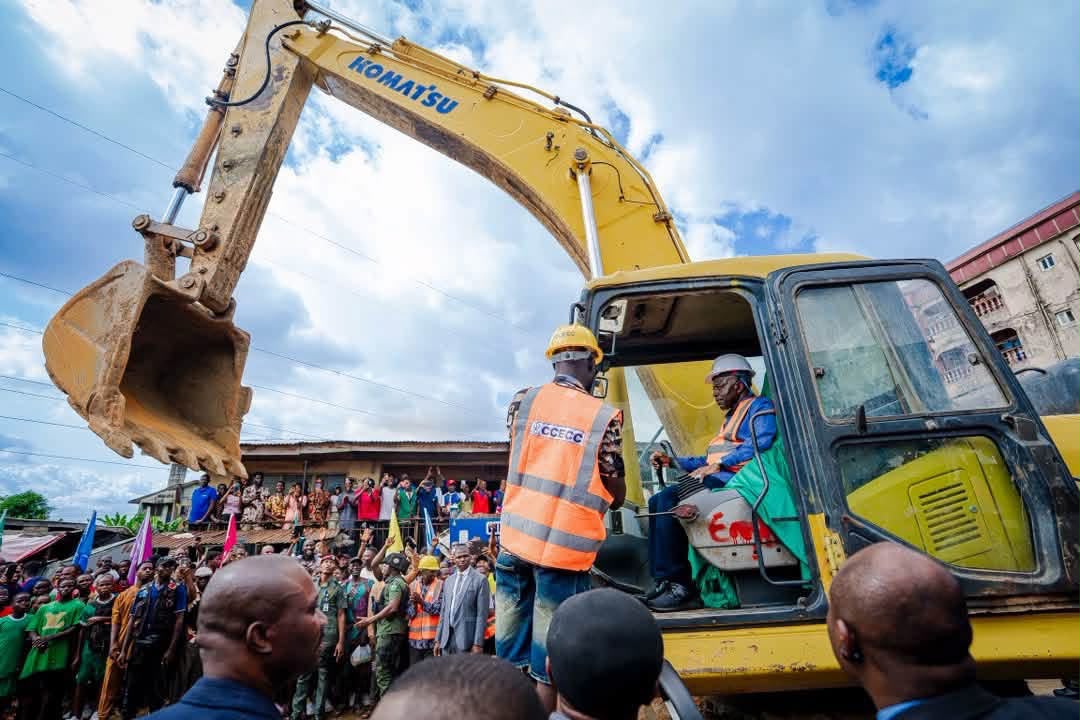

Gov. Otti takes restoration drive to Uratta and Old Express Roads, rekindles hope for Aba commercial revival
By Ogbonnaya Ikokwu
The future of a commercial city can be shaped by the condition of its roads, the ease with which goods reach markets and the confidence businesses have in the environment where they invest. For Aba, southeastern Nigeria’s renowned manufacturing and trading hub, the reconstruction of Uratta and Old Express Roads represents a significant new chapter in Governor Alex Otti’s drive to restore the city’s economic vitality after years of infrastructure deterioration.
At the flag off ceremony on Wednesday, Otti announced the reconstruction of the 3.15 kilometre Uratta Road and the 3.95 kilometre Old Express Road, projects he described as the final frontier in the first phase of his administration’s broader programme to rehabilitate major roads in Aba. The projects have a completion timeline of about 24 months or less, according to the governor.
For residents, traders, manufacturers, transport operators and property owners whose livelihoods depend on these corridors, the announcement carries implications beyond asphalt and drainage. It speaks to the possibility of restoring commercial confidence, improving access and recovering economic opportunities lost when infrastructure fails to support productive activity.
Otti anchored the initiative in the promise that propelled his political campaign in 2023: “Weep no more, help is on the way.” He said the declaration was not an ordinary political slogan but an expression of conviction that the hardship endured by Abia residents could be overcome through purposeful leadership and sustained commitment.
His address presented infrastructure renewal as part of a wider restoration agenda, pointing to interventions on Port Harcourt Road, Ohanku Road and Obohia Road, alongside efforts in education, healthcare and public service delivery. He also cited the recruitment of more than 10,000 young people to support services in the education and health sectors, as well as improvements in the payment of workers and retirees.
The economic argument behind the road projects is consistent with international development evidence. The World Bank has documented how improved urban mobility can reduce travel costs, connect workers to employment and enable businesses to reach customers and markets more efficiently. In Brazil, the São Paulo Metro Line 5 project reduced average travel times for users by 50 per cent between 2010 and 2020. Although a metropolitan rail project differs from road reconstruction in Aba, the underlying lesson is relevant: better transport infrastructure can release economic opportunities previously constrained by poor connectivity.
For Aba, where manufacturing, wholesale trading, artisanal production and distribution depend on the movement of people and goods, the stakes are particularly high. A deteriorated road can increase vehicle maintenance costs, disrupt deliveries, discourage customers and make daily commercial activity more expensive. Its rehabilitation offers the prospect of easing these pressures, although the eventual economic gains will depend on construction quality, maintenance and the broader business environment.
The two roads form part of the Abia State Integrated Infrastructure Development Project, a multilateral development initiative launched in July 2025. The African Development Bank announced a $263.8 million infrastructure programme involving the Abia State Government, the Federal Government, the Islamic Development Bank and other financing partners, with provisions for road rehabilitation, erosion control and related urban improvements.
Otti credited his administration with helping to unlock the financing needed to advance the long anticipated programme. He expressed appreciation to the African Development Bank, the Federal Government and other partners, stressing that funding arrangements for the two roads had been secured. He said the contractor, China Civil Engineering Construction Corporation, had mobilised equipment and personnel and would remain on site until the work was satisfactorily completed.
The governor’s assurance is consequential in a state where residents have endured repeated expectations of infrastructure renewal. Yet the ultimate measure of success will not be the ceremony, the machinery assembled at the site or the strength of official promises. It will be the quality of the finished roads, the reliability of drainage systems, adherence to construction standards and the willingness of government to maintain the infrastructure after commissioning.
Gov. Otti acknowledged that construction would bring temporary inconvenience to residents and businesses. He directed the project team to maintain regular communication with affected communities, address legitimate concerns and observe international standards in construction safety and resettlement procedures. His appeal for cooperation recognises that successful urban renewal requires both competent project execution and public confidence.
He also urged residents to remain vigilant, pay their taxes when due and report suspicious activities to security agencies, linking civic responsibility to the wider pursuit of development.
For Aba, the significance of Wednesday’s flag off lies in the possibility of converting a long standing public grievance into measurable progress. Gov. Otti has placed his restoration agenda before the people once again, with two important commercial corridors now entering the reconstruction phase.
If delivered to the promised standard and supported by sustained maintenance, Uratta and Old Express Roads could strengthen the foundations for renewed investment, improved mobility and expanded opportunities for local enterprises.
The promise of restoration is now being tested on the ground. For the traders, workers, manufacturers and families whose daily lives depend on Aba’s roads, the desired outcome is straightforward: infrastructure that works, commerce that flourishes and a city whose economic promise is no longer held back by the condition of its streets.
#Alex Otti
#TheNewAbiaishere
#ToGodBeTheGlory
Ogbonnaya Ikokwu is a journalist and public affairs analyst writing from Umuahia.