
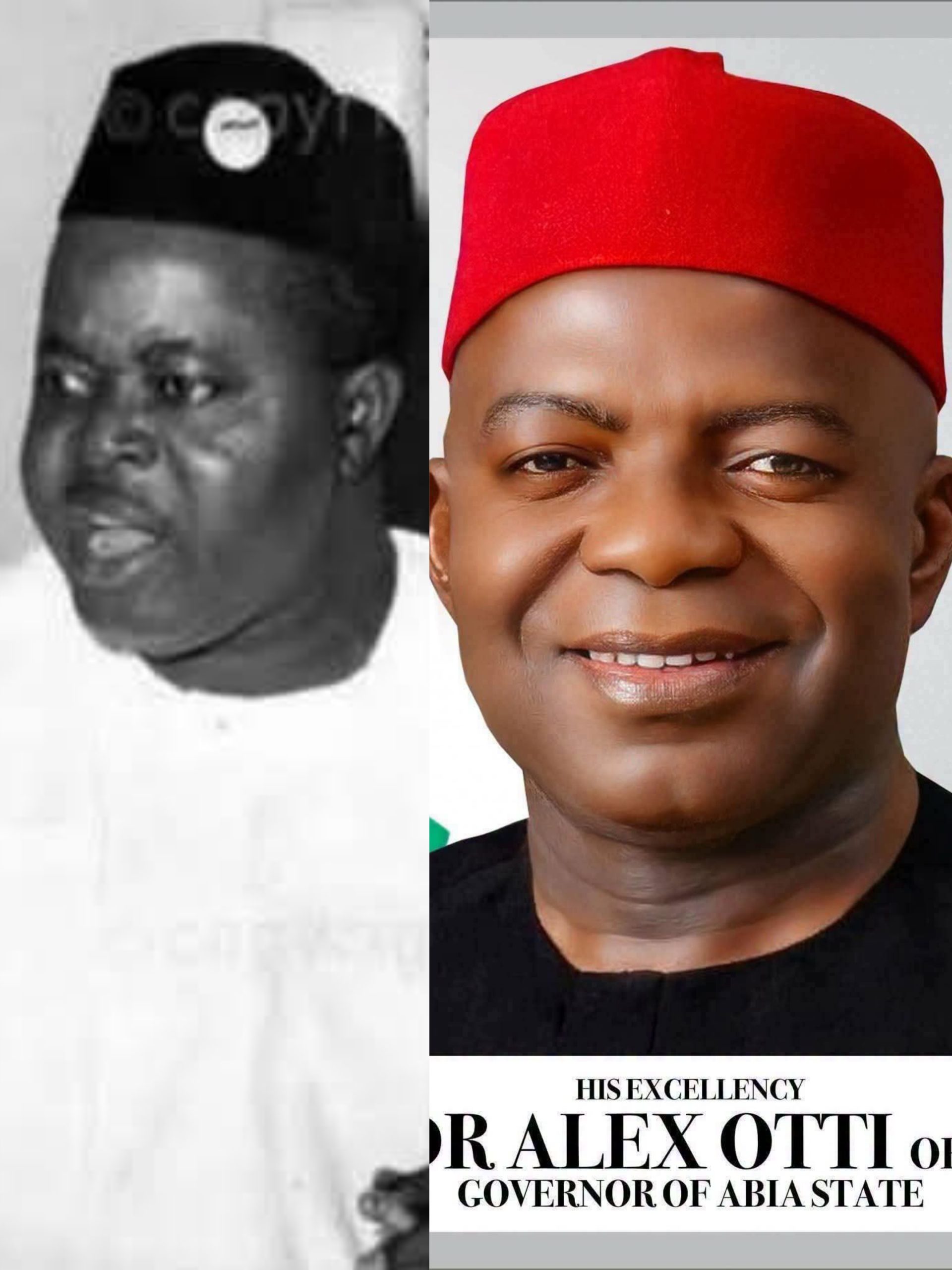

Otti Revives Okpara’s Agricultural Dream, Bets On Technology And Investment To Rebuild Abia’s Economy
By Ogbonnaya Ikokwu
Sixty years after the political upheavals that ended Dr Michael Iheonukara Okpara’s administration, the agricultural vision that once shaped Eastern Nigeria’s development remains a compelling reference point in the search for economic prosperity.
For the Abia State Governor, Alex Otti, that legacy is more than a chapter in history; it is a development blueprint whose revival could reconnect agriculture, industrialisation, employment and generational wealth creation.
Addressing the third Dr Michael Iheonukara Okpara Lecture and Founder’s Day celebration of Michael Okpara University of Agriculture, Umudike, on Thursday, October 15, 2026, Otti placed enduring leadership and agricultural transformation at the centre of his message. His address, titled “The Immortality of Good Works,” argued that the real measure of public leadership lies in the institutions established, opportunities created and prosperity sustained long after officeholders have departed.
It was also an opportunity to present his administration’s ambition to reposition Abia’s agricultural sector through private investment, technological innovation and renewed attention to the state’s productive assets.
Okpara’s historical record provides context for that ambition. As Premier of the former Eastern Region from 1959 to 1966, he championed farm settlements, community plantations and large-scale agricultural investment, particularly in oil palm. Historical research published by the University of Calgary Press documents the region’s ambitious tree-crop programme and the establishment of agricultural settlements intended to improve production, create employment and modernise rural communities.
Although the programme was disrupted by the Nigerian Civil War and subsequent policy changes, its central lesson remains relevant: agriculture can serve as the foundation of a wider economic transformation when linked to infrastructure, technical expertise, processing and markets.
Otti’s approach, as outlined in his address, seeks to translate that historical lesson into a contemporary investment strategy.
He disclosed that his administration had reached understandings with investors interested in committing hundreds of millions of dollars to Abia’s agricultural value chain, particularly oil palm. The governor’s remarks follow an earlier announcement by the Abia State Government in March 2026 that it was preparing to formalise a proposed partnership with Presco Plc for plantation development, with 14,000 hectares discussed as a possible starting point.
At the time of that announcement, the government described the memorandum of understanding as a next step, making the distinction between investment intentions and completed implementation important.
The international experience of agricultural economies offers useful lessons for this undertaking. The Netherlands, for example, demonstrates how agricultural research, specialised production, efficient logistics and sophisticated food-processing industries can support a globally competitive agrifood sector despite limited land resources.
Its experience is not directly transferable to Abia, whose infrastructure, financing conditions and farming systems differ, but it illustrates the economic value of connecting farm production with research, processing and export markets. For Abia, the opportunity extends beyond growing oil palm to developing reliable processing capacity, supporting local suppliers and creating downstream businesses.
Technology is central to that possibility. At the Umudike event, themed “Leveraging Technology in Agriculture,” Otti commended guest lecturer Seyi Ebenezer for his presentation and emphasised the importance of applying the knowledge shared to economic development. Research by the Food and Agriculture Organization of the United Nations has found that digital tools and appropriate automation can improve agricultural productivity, efficiency and resilience. However, adoption remains constrained in many developing economies by high costs, limited digital skills and inadequate enabling infrastructure.
For Abia, this means that technology must reach farmers through affordable equipment, practical extension services, improved seedlings, accessible financing and dependable routes to market.
Equally significant is the human dimension of Otti’s message.
Addressing students and young professionals, he urged active citizenship and participation in democratic processes, arguing that societies lose valuable opportunities when people with the capacity to lead withdraw from public service.
He also called on citizens to protect their votes, linking democratic accountability with the quality of decisions that shape their everyday economic and social realities.
The governor’s commitment to supporting the university’s lecture series further connects agricultural education with the policy challenge confronting the state. Research institutions can help identify suitable crop varieties, improve processing methods, train skilled agricultural professionals and develop technologies adapted to local conditions.
Such contributions become economically meaningful when research findings move beyond lecture theatres into farms, cooperatives, processing facilities and viable enterprises.
Ultimately, the promise of Otti’s agricultural agenda will be measured not by investment announcements alone, but by verifiable projects, increased productivity, jobs created, farmers’ incomes, local processing capacity and the sustainability of public-private partnerships. Okpara’s legacy provides the historical inspiration; technology, investment and institutional continuity offer possible pathways forward.
At Umudike, Otti’s central proposition was that good works acquire immortality when their benefits outlive their originators. For Abia, the challenge is to turn that principle into a productive agricultural economy in which the lessons of the past deliver measurable opportunities for present and future generations.
Signature tone
#Alex Otti
#TheNewAbiaishere
#ToGodBeTheGlory
Ogbonnaya Ikokwu is a journalist and public affairs analyst writing from Umuahia.