

How partnership rather than politics is strengthening Abia development agenda under Otti
By Ogbonnaya Ikokwu
In many democracies across the world, history shows that genuine development often flourishes when governments place the welfare of citizens above partisan rivalry.
In counties like Germany, Singapore, Rwanda and the United Arab Emirates, some of the most celebrated development stories have emerged where different levels of government chose cooperation over confrontation, infrastructure over political rhetoric, and long term planning over short term electoral calculations.
That philosophy is currently taking firmer root in Abia State.
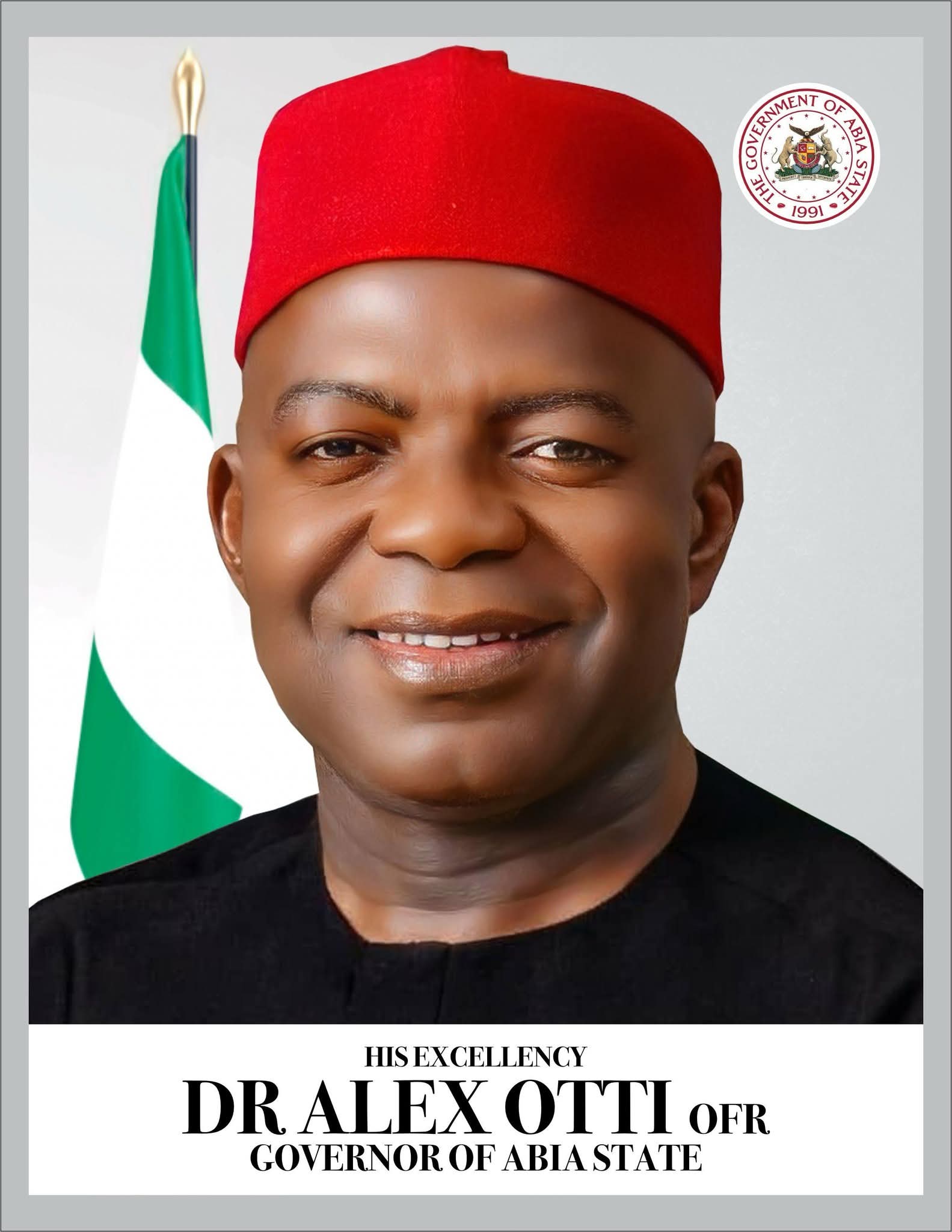
Three years after assuming office, Governor Alex Otti is increasingly attracting national attention, not merely because of the number of projects executed, but because of the governance model emerging in the state.
This model that places collaboration with the Federal Government at the centre of development while pursuing an ambitious programme of infrastructure renewal, power restoration, housing expansion, transportation reform and economic revitalisation.
That growing national recognition received another significant boost when members of the Renewed Hope Media Team from the Presidency undertook an extensive inspection tour of major federal and state projects across Abia. What they encountered was a state undergoing one of its most ambitious infrastructure transformations in recent history.
Speaking after inspecting numerous projects across the state, the Special Adviser to President Bola Tinubu on Media and Public Communication, Sunday Dare, described the pace of development under Gov. Otti as impressive, noting that Abia was experiencing a remarkable transformation across virtually every critical sector.
For many observers, Dare’s remarks represented more than routine official commendation. They reflected an acknowledgement from the Presidency that measurable development can transcend political party boundaries when governance remains focused on citizens.
Across advanced economies, this principle has become an established governance philosophy. In countries such as Canada, Australia and the United Kingdom, national and sub national governments routinely cooperate on transportation, housing, healthcare and infrastructure regardless of political affiliations. Development experts argue that such cooperation reduces duplication, accelerates project delivery and improves public confidence in government institutions.
It is this same collaborative governance model that appears to be evolving in Abia.
During the inspection, Dare observed that within only three years the state had recorded visible improvements in road construction, transportation, housing and electricity infrastructure while maintaining productive engagement with the Federal Government despite political differences.
According to him, governance should never be imprisoned by party identity because excessive political competition often slows development and ultimately hurts ordinary citizens.
His remarks resonate strongly with findings by international institutions including the Organisation for Economic Cooperation and Development and the World Bank, both of which have consistently maintained that effective cooperation between different levels of government produces stronger economic growth, better infrastructure outcomes and more efficient public service delivery.
Perhaps nowhere is this transformation more visible than on the expansive Umuahia to Uzuakoli to Akara to Alayi to Abiriba to Ohafia road corridor.
Once regarded as one of the most dreaded highways in Abia, the sixty seven kilometre corridor had for years become a painful symbol of neglect. Commercial transport operators struggled daily with damaged vehicles. Farmers found it difficult to move agricultural produce to urban markets. Rural businesses gradually declined while travel time increased dramatically.
Today, that narrative is changing.
Officials explained during the inspection that the road, fully reconstructed by the Abia State Government, now connects numerous local government areas across Abia Central and Abia North, opening fresh economic opportunities for farming communities, traders, transport operators and investors.
The inclusion of modern street lighting also reflects changing global standards where road infrastructure is increasingly designed not only for movement but also for improved safety, security and nighttime economic activity.
International studies consistently demonstrate that improved road connectivity stimulates local economies by lowering transportation costs, reducing post harvest losses, attracting investment and expanding access to education and healthcare. Similar development patterns have been recorded in countries such as India, Brazil and Ethiopia following major rural road expansion programmes.
Equally significant is Abia’s growing investment in electricity infrastructure.
Reliable electricity remains one of the strongest indicators of economic competitiveness across the world. Nations that have successfully industrialised have consistently prioritised stable power supply as the foundation for manufacturing, commerce, digital innovation and employment creation.
In Ohafia, communities that endured nearly eight years without electricity following extensive vandalism are now approaching restoration.
According to the Commissioner for Power and Public Utilities, Engineer Ikechukwu Monday, the state has completed a twenty kilometre thirty three kilovolt power line stretching from Ihechiowa in Arochukwu to Ebem in Ohafia together with a newly installed seven point five megavolt ampere injection substation.
Final installations are now underway before electricity is fully restored across Ohafia Local Government Area.
Even more strategically important is the state’s ongoing effort to acquire a majority stake in the Abia operations of the Enugu Electricity Distribution Company. If completed, the transaction could significantly expand stable electricity supply to local government areas currently outside the Geometric Power coverage area.
Globally, greater state participation in electricity distribution has often accelerated investment, improved accountability and strengthened service delivery when accompanied by sound regulatory oversight.
The inspection also highlighted expanding investment in affordable housing.
The Renewed Hope Housing Estates in Umuahia and Bende represent part of wider efforts to reduce housing deficits while supporting urban expansion and economic growth.
Housing economists frequently describe residential construction as one of the strongest economic multipliers because every housing project stimulates demand across dozens of industries including cement, steel, timber, electrical materials, furniture manufacturing, logistics and skilled labour.
Countries including Singapore and South Korea have demonstrated how sustained housing investment can simultaneously improve living standards while creating employment and stimulating industrial growth.
Transportation reform also featured prominently during the inspection.
The recently commissioned Nnenna Oti Bus Terminal stands as part of wider efforts to modernise public transport infrastructure within the state.
Modern transport terminals increasingly serve not only as passenger facilities but also as commercial centres that encourage organised mobility, reduce urban congestion and improve public safety while supporting local businesses.
Inspectors equally visited the iconic Omenuko Bridge, the four lane Dr Uma Ukpai Road and other strategic projects that collectively reflect the state’s wider infrastructure renewal agenda.
Commissioner for Information Prince Okey Kanu and Commissioner for Works Engineer Otumchere Oti explained that the road network now provides improved connectivity for numerous agricultural communities previously isolated by years of poor infrastructure.
Special Adviser to the Governor on Media and Publicity Ferdinand Ekeoma recalled that several of the roads had remained almost impassable for nearly two decades before Governor Otti’s intervention, making their rehabilitation one of the administration’s most visible achievements.
Development scholars often emphasise that infrastructure alone does not transform societies. What ultimately sustains development is institutional continuity, transparent governance, prudent financial management and consistent maintenance of public assets.
Those principles are increasingly shaping public discourse surrounding Abia’s ongoing transformation.
As the inspection concluded, one broader message emerged beyond the individual projects themselves.
The evolving story of Abia is becoming less about politics and increasingly about governance.
It is becoming a conversation about how cooperation between governments can accelerate development. It is about how strategic infrastructure can reconnect forgotten communities. It is about how electricity can revive local economies. It is about how roads can restore commerce, improve education, expand healthcare access and reconnect people to opportunity.
Whether measured through reconstructed highways, expanding housing estates, restored electricity networks or renewed collaboration with the Federal Government, Abia is steadily presenting itself as a practical case study in governance driven by partnership rather than political division.
For many development observers, that may ultimately become the state’s most enduring legacy, demonstrating that when governments choose cooperation over confrontation, citizens become the greatest beneficiaries.
#GovernorOttiIsBuildingTheNewAbia
#ToGodBeTheGlory
Ogbonnaya Ikokwu is a journalist and public affairs analyst writing from Umuahia.