

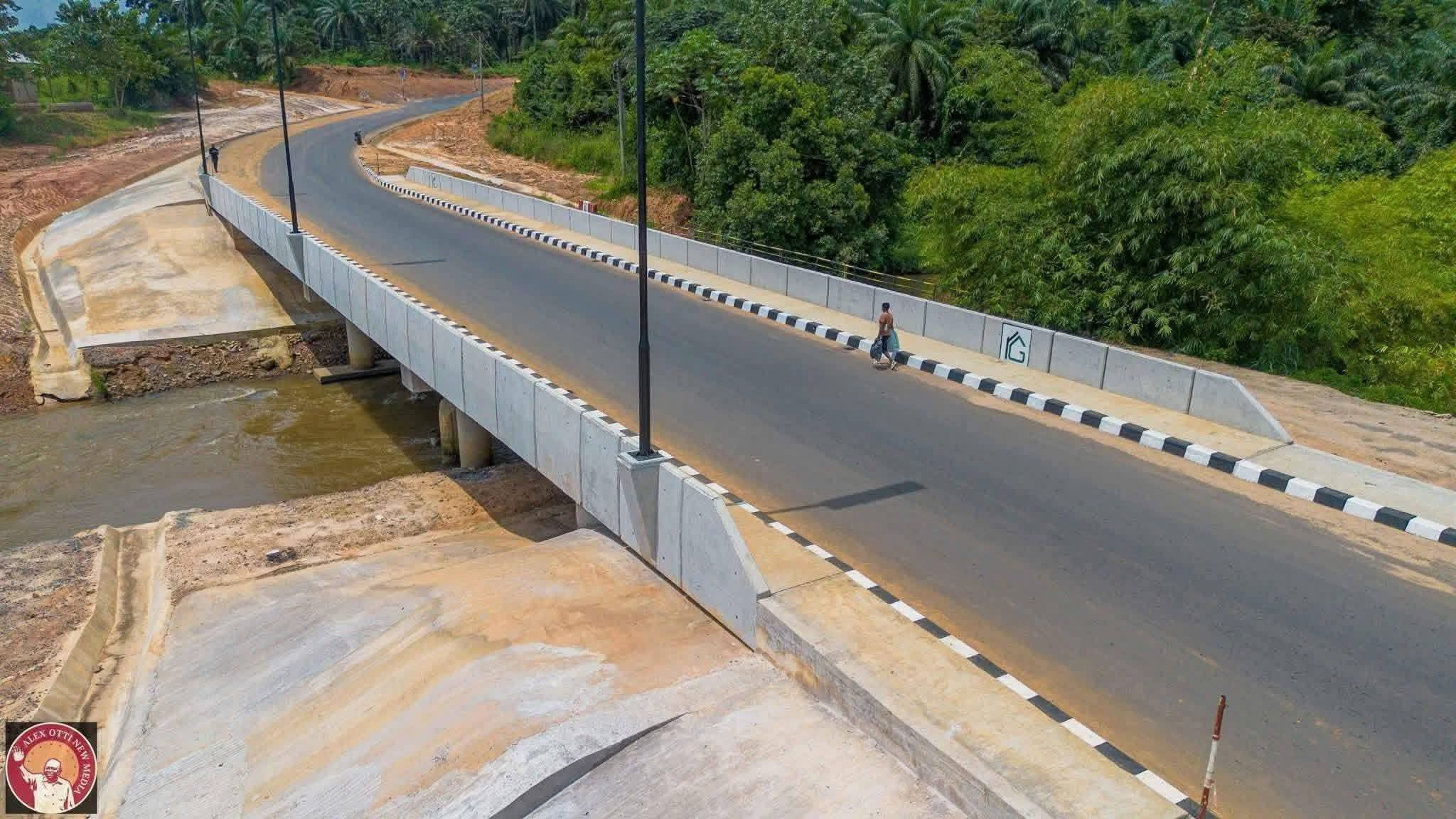
Omenuko Bridge opens new chapter in Abia’s infrastructural renewal
By Ogbonnaya Ikokwu
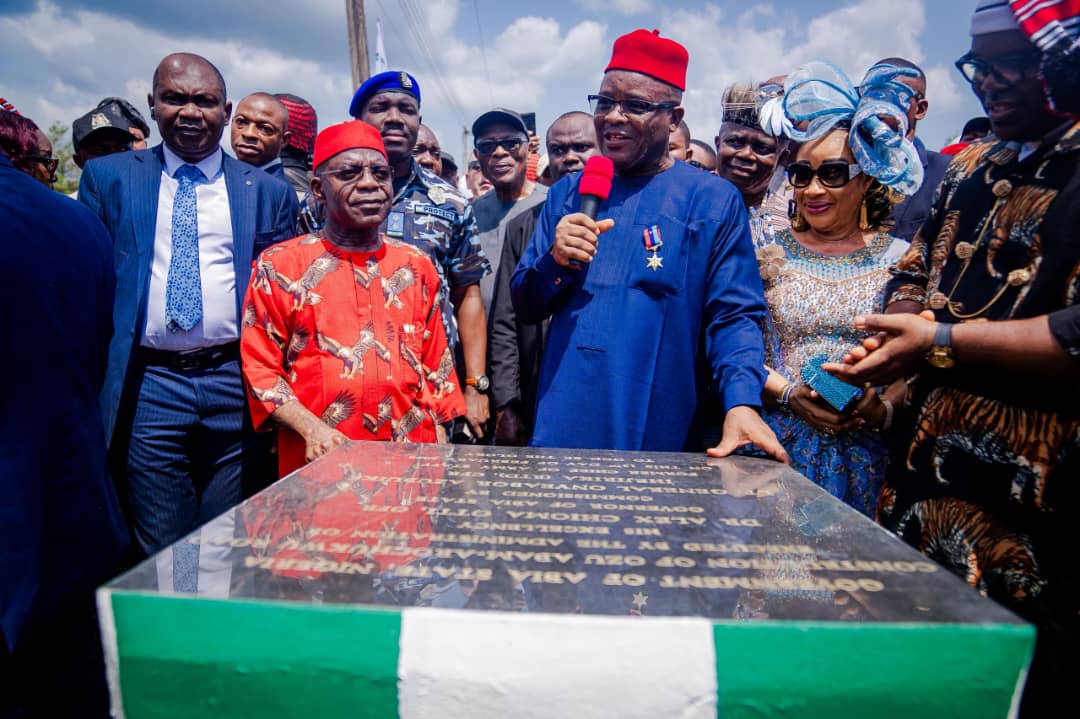
History was made on Friday, February 13, 2026, in Ozu Abam, Arochukwu Local Government Area of Abia State, with the inauguration of the new Omenuko Bridge across the Igwu River and the 30-kilometre Ozu Abam–Arochukwu Road. The twin projects marked a decisive turning point for Abam Onyerubi and neighbouring communities long encumbered by poor connectivity.
By any measure of public life in Nigeria, the occasion closed an old chapter of pain and hardship for road users and signalled the beginning of a safer, more prosperous era for commuters and residents of adjoining areas.
As expected, the Abam High School ground came alive with celebration, animated by the sense that decades of waiting had finally ended in praise. The mood was set during a grand civic reception held in honour of Abia State Gov. Alex Otti, whose administration delivered the projects.
Addressing the multitude of natives from the immediate and neighbouring villages and communities, the governor said that the bridge and road are not merely physical infrastructure but instruments of moral and social repair after decades of neglect.
For more than 70 years, the old Omenuko Bridge had stood as a fragile crossing with a tragic record. It linked farms to markets and communities to schools and hospitals, yet its weakness also carried grief. Families recalled lives lost to the Igwu River during floods and accidents, and journeys aborted by fear.
Against this backdrop, Gov. Otti placed the new bridge within a broader promise to rebuild trust in public works. Although domiciled in Abam Onyerubi, the governor noted that the projects were designed for wider social and economic impact, serving Ohafia, Arochukwu, Ihechiowa, Isu and other clans, whose daily lives depend on a reliable transport corridor.
The gathering balanced celebration with reminiscence. A minute silence was observed in honour of those who lost their lives at the Igwu River over the years, including 17 students who drowned in 2007, while travelling to an examination centre, as well as those whose names remain etched in community memory.
The governor referenced the experience of the late Rev. Dr Uma Ukpai, who lost two of his children to the river, decades ago, as emblematic of the human cost of abandoned infrastructure. In doing so, the ceremony resisted triumphalism and anchored renewal in an honest acknowledgement of pain.
From a development perspective, the new bridge and road altered the fundamentals of life in Abam, an agrarian area, where cassava, palm produce, vegetables and livestock depend on timely access to urban markets. Poor roads previously meant post-harvest losses, depressed incomes and constrained opportunities. Education also suffered, as pupils and teachers struggled with access, while young people postponed prospects elsewhere.
The Ozu Abam–Arochukwu Road now shortens travel time, improves safety and integrates local production into regional trade routes. Experience from other societies shows that rural roads yield high returns through reduced transport costs, higher farm-gate prices, improved school attendance and better access to healthcare. Those benchmarks, residents believe, are now within reach.
Gov. Otti linked the works to a broader governance philosophy shaped, he said, by the collapse of public infrastructure that motivated his entry into politics. Over the past 32 months, his administration has prioritised roads, bridges, schools and health facilities, with an emphasis on timely delivery and value for money.
In Abam alone, he reported that about 75 per cent of projects initiated across different communities have been completed, with more inaugurations expected within the next 12 months. The tone of the address underscored an alignment between leadership and community aspiration as the basis for sustainable progress.
Residents interviewed at the reception echoed that sentiment. Traders spoke of renewed confidence to move goods at dawn and return safely at dusk. Parents anticipated more predictable school calendars. Artisans and transport operators pointed to new livelihoods created through construction and maintenance. For those in the diaspora, the projects reopened emotional and practical pathways home, easing visits, investment and participation in community life.
The ceremony also provided a platform to deliver a civic and genuine message to the people. And the governor urged vigilance against a return to empty promises, describing the transformation as the product of collective resolve expressed through democratic choice. He credited ordinary citizens – farmers, artisans, students, professionals, entrepreneurs and those in the diaspora, as the backbone of change.
As dusk settled over Ozu Abam, the illuminated bridge stood both as a literal crossing and a powerful symbol. A river that once divided now connects; memory flows alongside movement, grief alongside hope. As many repeated across the field, the siege had ended and a new page had been turned.
For Abam Onyerubi and the communities that converge on the Igwu River, the future now travels on firmer ground within Abia State.
#GovOttiIsBuildingTheNewAbia
To God be the glory.
Ogbonnaya Ikokwu is a journalist and public affairs analyst writing from Umuahia.