

Gov. Otti rejigs Aba’s fashion industry with 4,000 youths graduate set to boost global creative economy
By Ogbonnaya Ikokwu
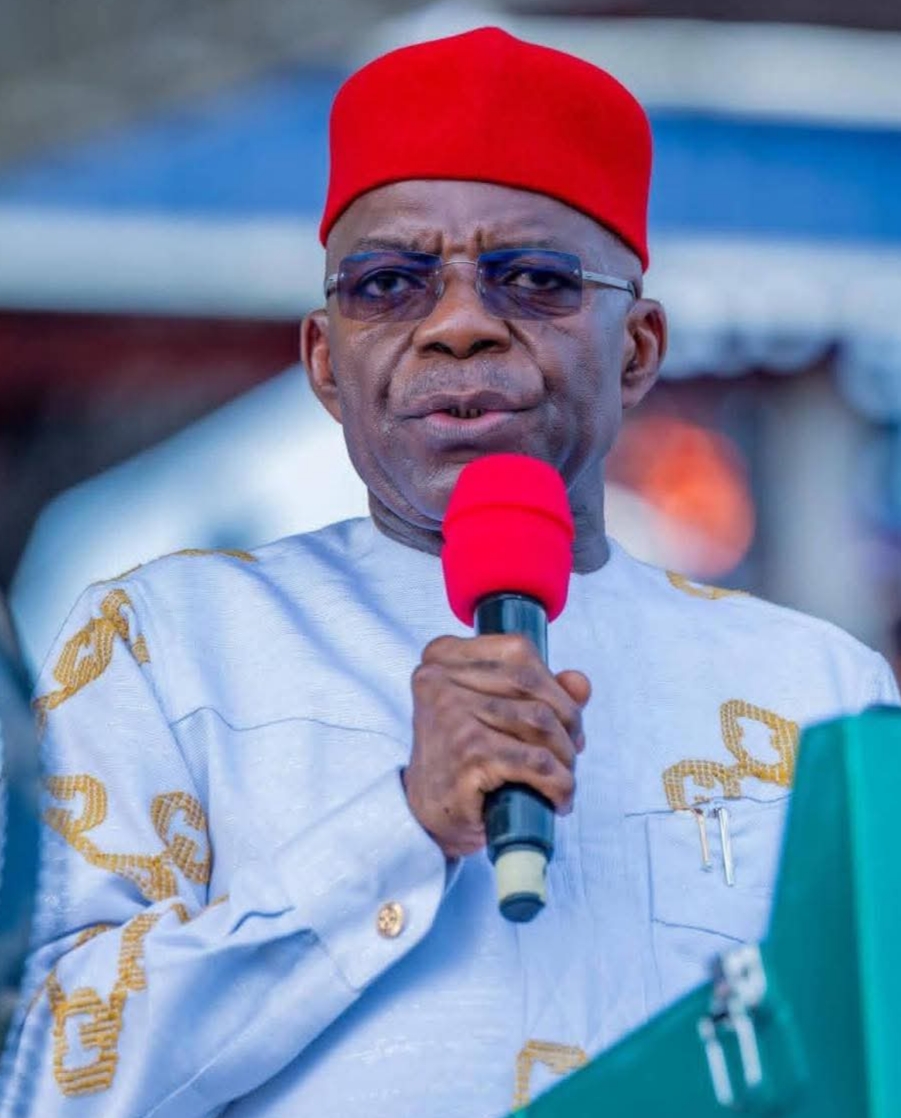
Abia State Governor Alex Otti,
has positioned Aba once again at the centre of Africa’s growing fashion revolution, unveiling a development model that mirrors some of the world’s most successful creative economy strategies.
This feat was achieved through the governor’s philosophy of business which mirrors empowerment as a pathway to innovation, enterprise and global competitiveness.
At the heart of this renewed vision was the graduation ceremony of 4,000 beneficiaries of the 2026 Fashion Future Programme held at the iconic Enyimba International Stadium, where Gov. Otti delivered a sweeping address that connected fashion, youth empowerment, industrialisation and economic transformation into one ambitious narrative.
The event, attended by government officials, development partners, fashion entrepreneurs and industry stakeholders, signalled more than the end of a training programme. It reflected a broader attempt to reposition Aba from being merely Nigeria’s informal manufacturing capital to becoming a globally recognised creative production hub comparable to emerging fashion ecosystems in parts of Asia, Europe and Africa.
For decades, Aba has enjoyed a reputation as the heartbeat of indigenous manufacturing in Nigeria. From leatherworks to garments and footwear, the city’s artisans have built an underground economy that has quietly supplied markets across West Africa. Yet despite its entrepreneurial strength, the sector has long struggled with inadequate infrastructure, limited global exposure, poor financing and weak institutional support.
Speaking before thousands of graduating trainees, Governor Otti described the Fashion Future Programme as “a masterclass in talent incubation, business development and enterprise exposure,” stressing that sustainable prosperity can only emerge when governments invest in ideas, skills and productivity rather than short term populism.
According to him, societies rise on the strength of empowering ideas and disciplined execution, noting that unemployment, insecurity and poverty cannot be solved without building human capacity.
The programme was delivered by Ethnocentrique Limited with support from Mastercard Foundation and the Abia State Government.
Industry analysts say the structure of the initiative closely reflects successful vocational and creative industry models already deployed in countries such as Italy, Bangladesh and Rwanda, where fashion and textile ecosystems have become powerful sources of employment and export earnings.
In Italy, fashion districts in cities such as Milan and Florence evolved through coordinated investments in technical training, artisan development and export branding. Bangladesh transformed its garment industry into one of the world’s largest employment generators through deliberate skills development and industrial clustering. Rwanda has in recent years invested heavily in “Made in Rwanda” campaigns to promotel local textiles and reduce import dependence.
At the ceremony, Gov. Otti announced that the state would soon launch a major integrated campaign promoting Made in Abia products, particularly fashion and lifestyle accessories produced in Aba. He further disclosed plans to strengthen production hubs and accelerate the revival of the ENASCO industrial facility as part of a wider economic expansion strategy.
Economic observers believe the significance of the initiative lies not merely in the number of graduates produced but in its attempt to formalise and scale a traditionally informal sector.
Nigeria’s creative economy has increasingly emerged as one of the country’s fastest growing non oil sectors. According to data from the National Bureau of Statistics and UNESCO cultural economy reports, creative industries across Africa already contribute billions of dollars annually to continental GDP while employing millions of young people.
Fashion, in particular, has become one of Africa’s most visible soft power exports, with designers from Nigeria, South Africa and Ghana gaining international visibility on global runways and digital marketplaces.
Yet experts maintain that Africa’s fashion future depends less on runway glamour and more on production capacity, technical skills and supply chain integration.
That reality appears to have informed the architecture of the Fashion Future Programme.
Beyond tailoring and design, the initiative reportedly exposed trainees to entrepreneurship, market systems, enterprise management and industry value chains.
Gov. Otti praised the programme for focusing not only on talent development but also on connections between creators, markets, financiers and policy institutions.
He specifically commended Rosy Fynn and Irunna Ejibe for what he described as a transformative empowerment model that moves beyond “handouts and tokenism.”
Observers note that this approach reflects a growing shift in international development philosophy where donor agencies and governments increasingly prioritise entrepreneurship ecosystems over traditional welfare interventions.
The role of technical certification also featured prominently during the ceremony. The programme received institutional backing from the National Board for Technical Education through its Skills Qualifications Framework, a move experts say could improve employability, standardisation and international competitiveness for participants.
In many advanced economies, vocational certification remains central to industrial productivity. Germany’s dual vocational training system, often cited as one of the world’s best, has for decades linked practical skills with formal accreditation, helping sustain the country’s globally respected manufacturing base.
Development economists argue that African governments hoping to address youth unemployment must increasingly embrace similar frameworks that blend creativity with certification and enterprise support.
Nigeria continues to battle high youth unemployment and underemployment figures, making skills based interventions increasingly critical. Analysts warn that without large scale investment in productive sectors, growing youth populations across the continent may remain vulnerable to poverty, migration pressures and criminal recruitment networks.
Gov. Otti directly referenced this concern, describing programmes such as the Fashion Future Programme as long term responses to unemployment and social instability.
“By equipping our young people with the competence to create value and earn decent income, we are depleting the pool of jobless persons in the community while growing the size of our gross domestic product,” he stated.
The Abia governor further linked the initiative to other youth oriented projects including TechRise and the Abia Leadership Academy, while revealing that the state has consistently allocated 20 per cent of its annual public expenditure to education over the last three years.
Policy experts say such sustained educational investment is significant, especially in a developing economy where many subnational governments struggle to prioritise human capital development.
For many graduates at the ceremony, however, the day carried a more personal meaning.
Clad in creative outfits that reflected the vibrant culture of Aba’s fashion identity, participants celebrated not only the completion of a programme but also the possibility of economic independence in a country where opportunities often appear scarce.
The atmosphere inside the stadium blended optimism with ambition as trainees interacted with mentors, showcased designs and envisioned futures that may extend far beyond local markets.
Once dismissed in some quarters as a chaotic commercial city surviving on informal hustle, the town is now seeking a new global identity built on innovation, manufacturing and creative enterprise.
Whether the transformation succeeds will depend largely on continuity, infrastructure delivery, financing access and market expansion. But for now, the graduation of 4,000 young creatives has added fresh momentum to a city already known for turning resilience into industry.
And as the lights dimmed at the stadium after the ceremony, one message resonated clearly through the gathering: in the emerging global creative economy, Aba no longer wants to merely participate. It wants to lead.
#Gov. Otti is Building the new Abia!
#To God be glory!
Ogbonnaya Ikokwu, a journalist and public affairs analyst, writes from Umuahia.